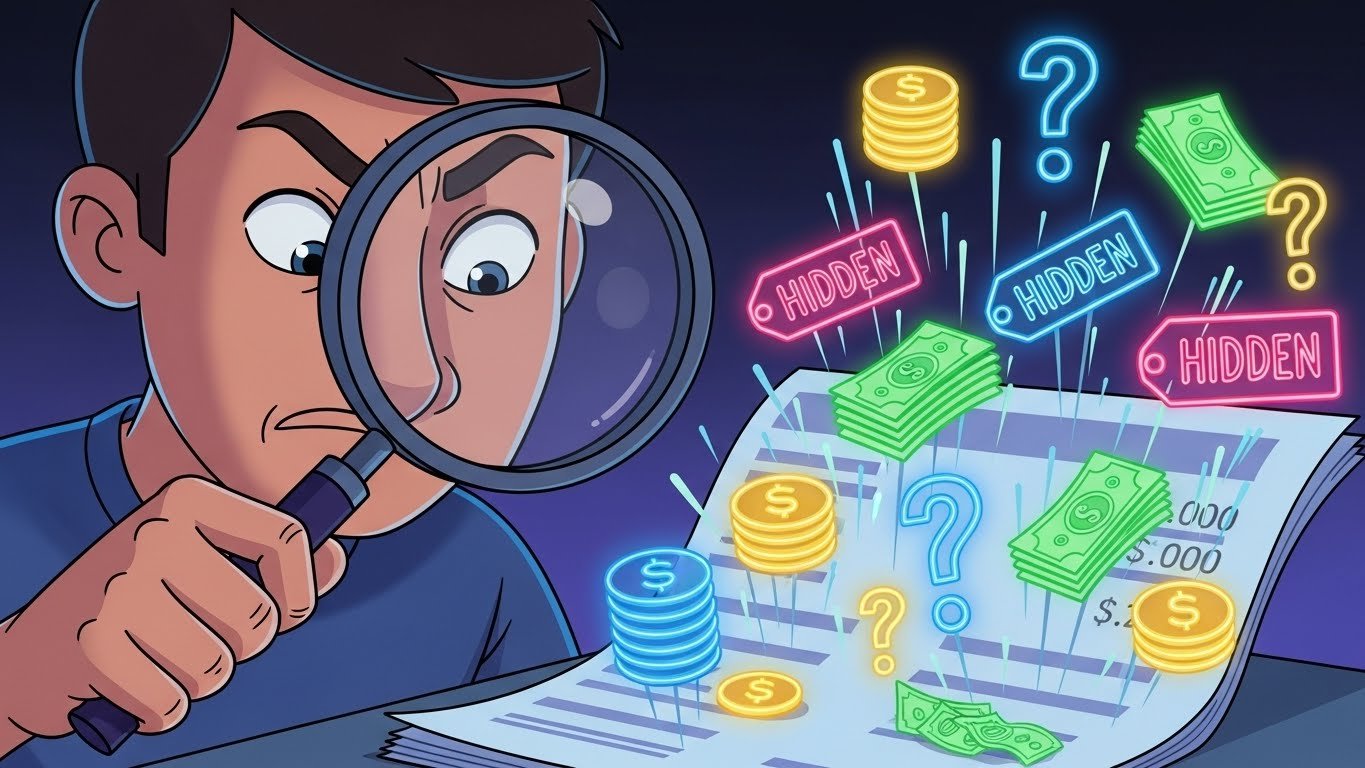
In today’s complex financial landscape, hidden fees are one of the most insidious threats to your savings. Whether it’s from your bank, credit card, or even your subscription services, these sneaky charges can quickly add up and eat into your hard-earned money. From maintenance fees to late-payment penalties, the list of common hidden fees can feel endless. While they may seem small at first glance, these fees can significantly impact your long-term financial health. Fortunately, with a bit of knowledge and vigilance, you can spot and avoid many of these unnecessary costs. Source: Personal finance insights and consumer reports — summarized and analyzed by TheDollarPulse.
Key Development
Research shows that Americans collectively spend billions of dollars annually on hidden fees. These often-unseen charges include things like ATM fees, account maintenance fees, hidden interest rate hikes, and even fees for using rewards points on credit cards. The surge in subscription services for entertainment, fitness, and even digital tools has led to an increase in “cancelation fees” and “auto-renewal” penalties that many consumers overlook. By understanding where to look and how to ask the right questions, you can minimize or eliminate these costs. Source: Consumer Reports on hidden fees in everyday finance — summarized and analyzed by TheDollarPulse.
Why It Matters
Hidden fees are not just inconvenient — they are damaging to your financial health. These fees disproportionately affect people who are already struggling with budget constraints, and they can lead to a cycle of debt if left unchecked. Moreover, they complicate your financial planning, making it harder to stick to a budget or save for future goals. Raising awareness about these hidden costs is crucial, especially in an era where digital finance tools often bury terms and conditions in fine print. Source: Financial experts’ advice on reducing unnecessary fees — summarized and analyzed by TheDollarPulse.
How to Spot and Avoid Hidden Fees
- Review your statements regularly: Whether it’s your bank account, credit card, or subscription services, make it a habit to carefully examine all transactions and charges.
- Ask questions before committing: Before signing up for any financial product, ask about all potential fees. Be especially cautious with services that offer “free trials” or “introductory” offers that may hide charges after the trial period.
- Use fee-free alternatives: Many financial institutions, for example, offer fee-free banking options or credit cards without annual fees.
- Automate your finances: Set up alerts to monitor spending and balance discrepancies so you can spot fees early.
Source: Tips from financial planners and consumer protection agencies — summarized and analyzed by TheDollarPulse.
TheDollarPulse Analysis
The key takeaway is that while hidden fees are an unavoidable part of modern financial systems, they are also avoidable with the right knowledge. Being proactive about your financial products, reviewing your bills and contracts, and shopping around for fee-free alternatives can save you hundreds, if not thousands, over time. For consumers, awareness and vigilance are the first steps in safeguarding their financial future.
Sources
Source: Consumer Reports on hidden fees and best practices — summarized and analyzed by TheDollarPulse.
This article contains original analysis and does not reproduce copyrighted text.