
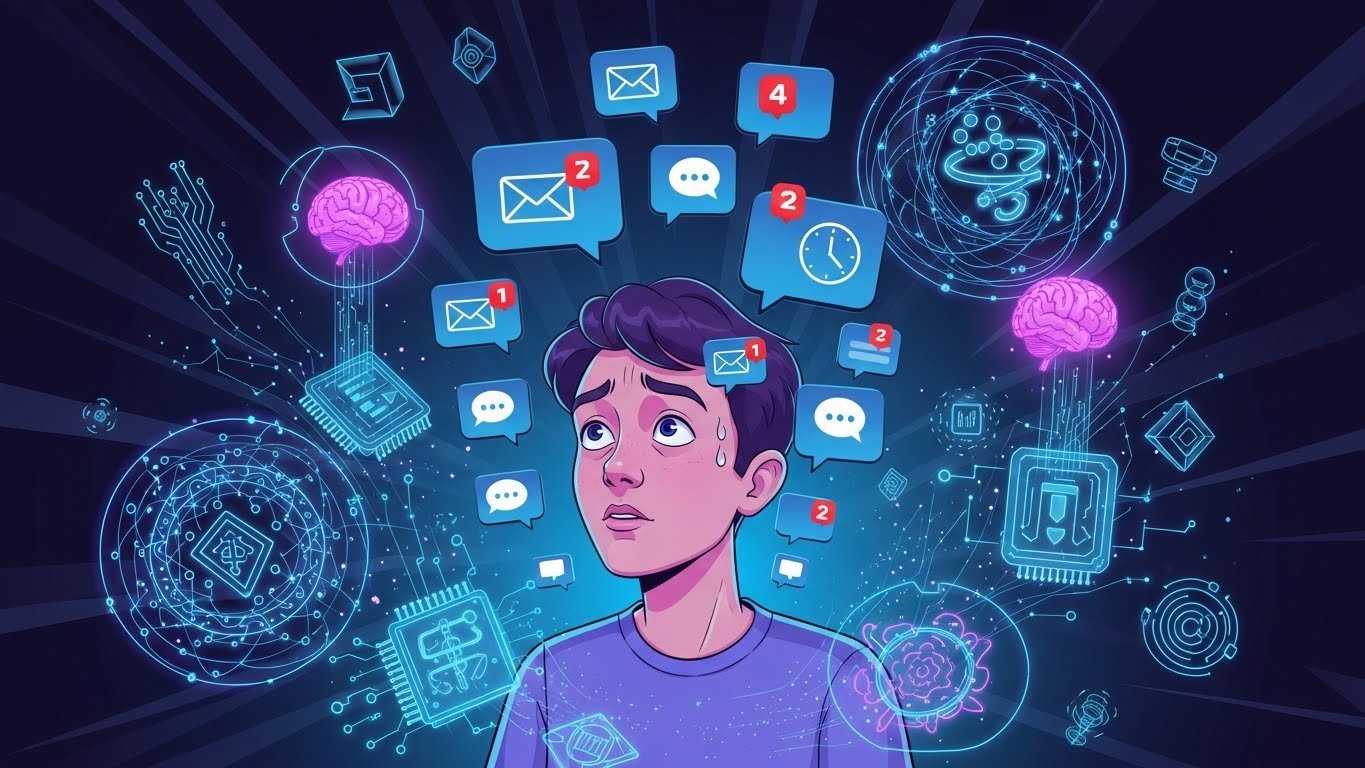
A new concern is emerging across the tech world: “AI overload.” The phrase is popping up in engineering circles, investor calls, and digital-privacy forums — and it reflects a growing fear that artificial intelligence adoption is accelerating faster than users, regulators, and infrastructure can handle. What started as excitement over breakthrough tools has evolved into a broader debate about burnout, algorithmic saturation, and the long-term consequences of constant AI integration.
At the center of the issue is cognitive fatigue. Users report feeling overwhelmed by the sheer number of AI-driven decisions happening in their devices, apps, and workflows. What was once optional is now unavoidable — and that shift is creating a new kind of digital pressure. Meanwhile, companies are racing to embed AI in every product tier, often without considering whether these features genuinely improve the user experience.
There’s also a rising concern among data-security experts: the more platforms that rely on AI, the larger the attack surface becomes. With sensitive data moving through increasingly complex models, the risk of mismanagement or exploitation grows. And regulators are struggling to keep up, drafting rules for technologies that evolve faster than legislation can track.
For everyday users, “AI overload” means navigating a digital environment that feels more crowded, more intrusive, and more automated than ever. For businesses, it signals a need to balance innovation with user trust. And for the tech industry at large, it raises the critical question: are we moving too fast for our own good?