
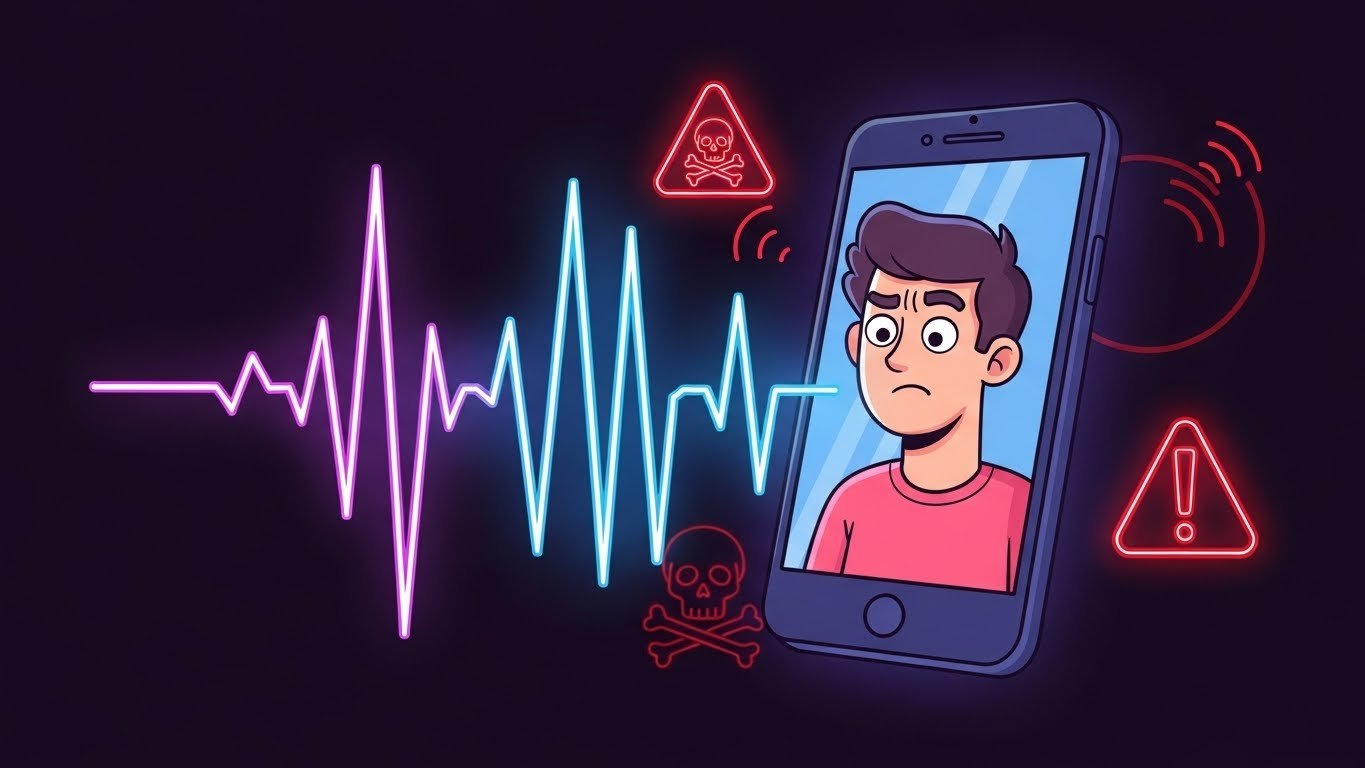
A wave of alarming reports is spreading across cybersecurity circles: deepfake scams are rising faster than any experts predicted for 2026. What was once a novelty — AI-generated videos and voices — has become a high-risk threat targeting banks, families, and businesses. Analysts say scammers can now create near-perfect replicas of a person’s voice with just a few seconds of audio, and that capability is rewriting the entire fraud landscape.
The most shocking trend is the rise of “voice hijack scams.” Victims receive calls that sound exactly like their spouse, employer, or child — pleading for money or urgent transfers. Law enforcement agencies report that these impersonations are becoming so sophisticated that even trained professionals struggle to distinguish real voices from AI-generated ones.
Financial institutions are also raising alarms. Some banks have documented fake audio instructions used to attempt wire transfers and account changes. Fraud teams warn that traditional identity checks like voice authentication are becoming obsolete almost overnight.
What makes this especially dangerous is accessibility. What once required expensive tools can now be done with free online software and a smartphone. The barrier to entry has collapsed, meaning more scammers, more targets, and more confusion.
Experts say the best defense is skepticism: verify all urgent requests through secondary channels, never rely on voice alone, and use multi-factor authentication wherever possible. As deepfake tech accelerates, trust — long the foundation of communication — must be rebuilt with new rules.