
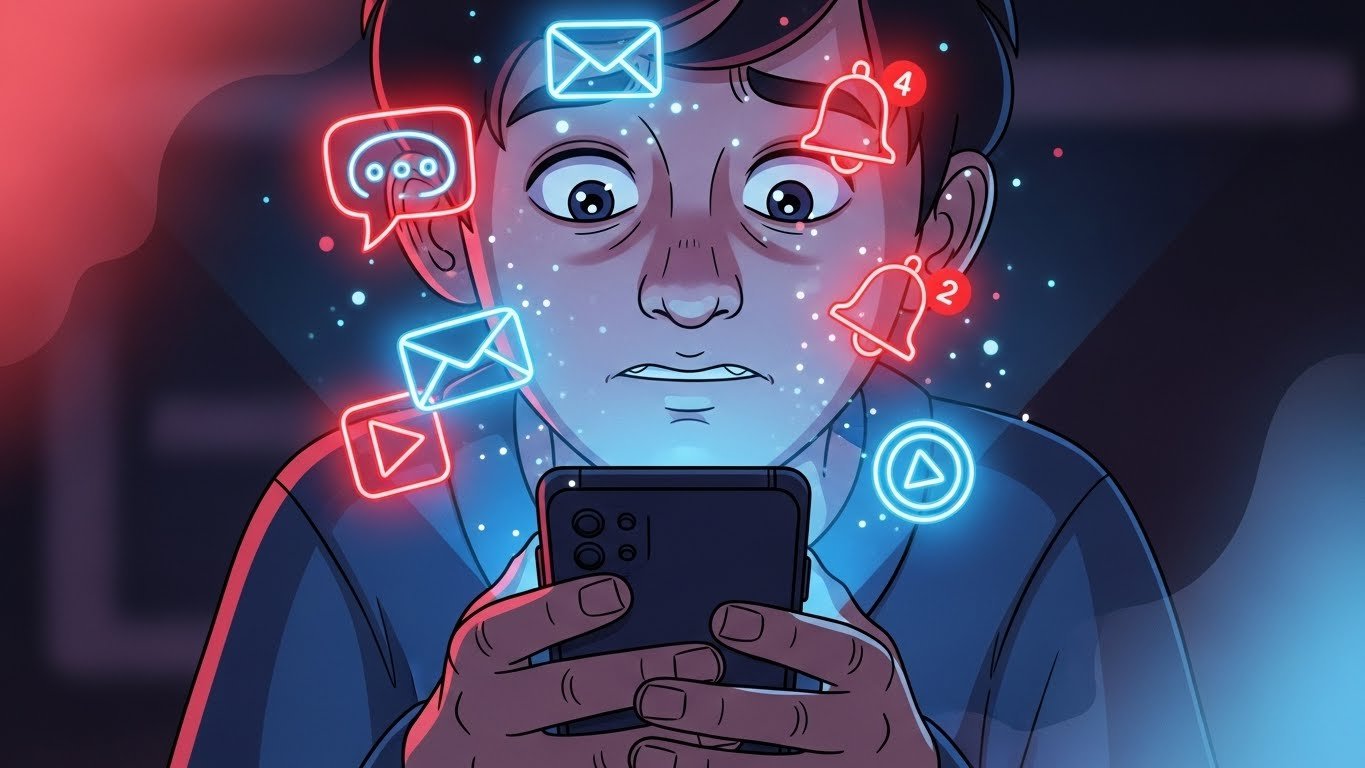
Health researchers are sounding the alarm on a silent behavior that’s quietly increasing anxiety levels across the U.S. in 2026: constant “micro-checking.” It’s the habit of briefly checking your phone — for messages, notifications, emails, or updates — dozens or even hundreds of times throughout the day. Most people don’t realize they’re doing it, but new studies show it’s significantly disrupting focus, mood stability, and emotional regulation.
Why is micro-checking so damaging? Psychologists explain that every quick phone glance triggers a small spike in anticipation and reward pathways. Over time, the brain becomes conditioned to expect stimulation, creating a low-level state of agitation when the phone is silent. This baseline tension eventually amplifies into full-blown anxiety symptoms: racing thoughts, irritability, poor sleep, and difficulty concentrating.
What makes the problem worse is timing. Micro-checking often happens during transitional moments — walking to the car, waiting in line, moving between tasks. These moments are traditionally when the brain decompresses, resets, and consolidates short-term memory. When they’re replaced with digital noise, the mind never truly rests.
Researchers warn that this could be one of the dominant mental health challenges of 2026, particularly among young adults and professionals. But there’s good news: small shifts, like batching notifications, silencing non-essential apps, and creating phone-free windows during the day, can dramatically reduce anxiety levels.
The biggest mental upgrade this year might be the simplest: learning to do nothing for a moment.