
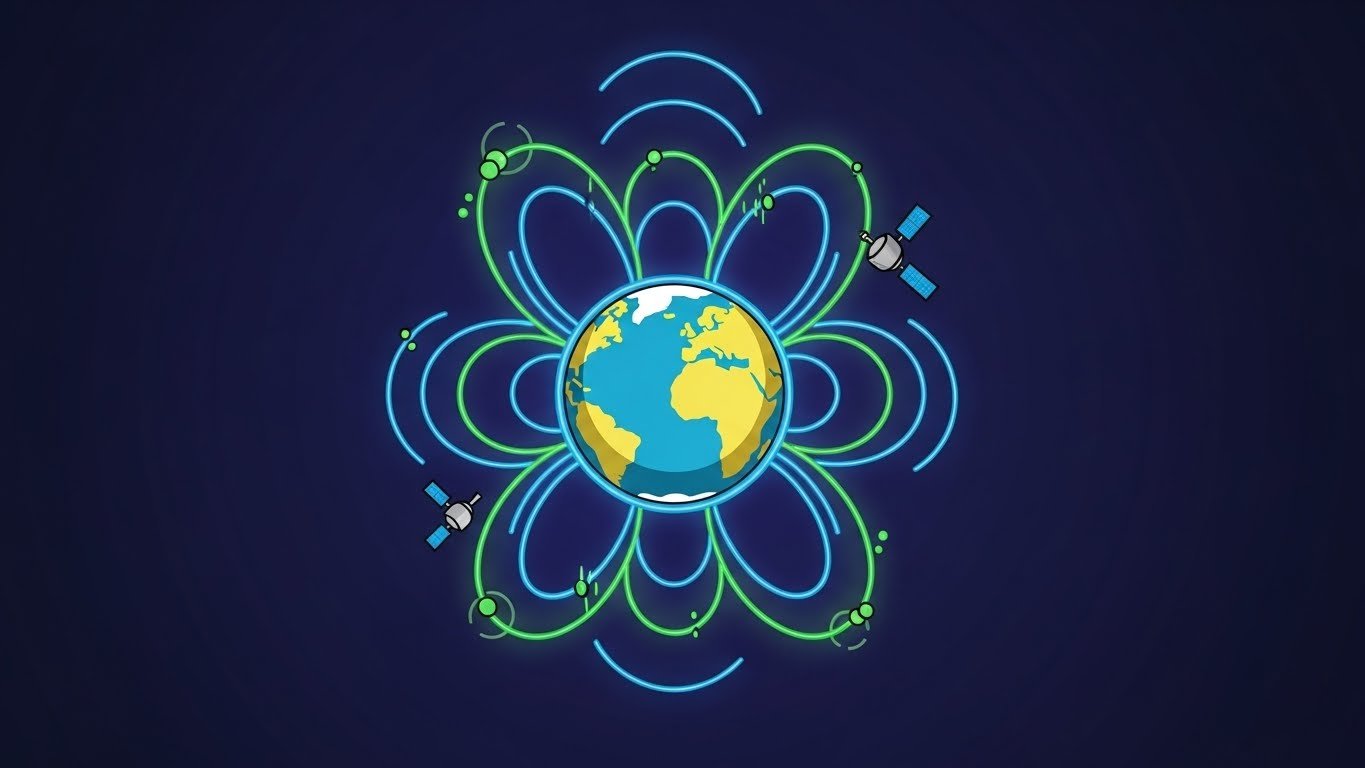
A new wave of research is raising global attention: Earth’s magnetic field — the invisible shield that protects the planet from solar radiation — is shifting faster than scientists predicted just a decade ago. The magnetic poles move naturally over time, but recent data shows an acceleration that has researchers rethinking long-term forecasts and potential impacts on navigation, satellites, and digital infrastructure.
The most unexpected finding is the sudden weakening of the field in a region known as the South Atlantic Anomaly, an area stretching from South America to southern Africa. Satellites passing through it experience increased radiation exposure, forcing space agencies to reroute or harden equipment. As this anomaly grows, engineers worry about impacts on GPS accuracy, communication systems, and even airplane flight paths.
But what does this mean for everyday life? Experts emphasize that while a rapid pole shift is unlikely to cause dramatic, apocalyptic events, the transition could create turbulence in technologies we depend on daily. Power grids would need recalibration. Satellites may require more radiation shielding. Compasses and navigation systems would need global updates. And increased solar activity could intensify the effects.
The good news: Earth has gone through magnetic changes many times before — and life continued without interruption. The concern today isn’t survival, but infrastructure. As our society becomes more digitally dependent, even small geomagnetic changes can have outsized effects.
Scientists say the best approach is preparation, not panic — and continued research will determine how the next decades unfold.