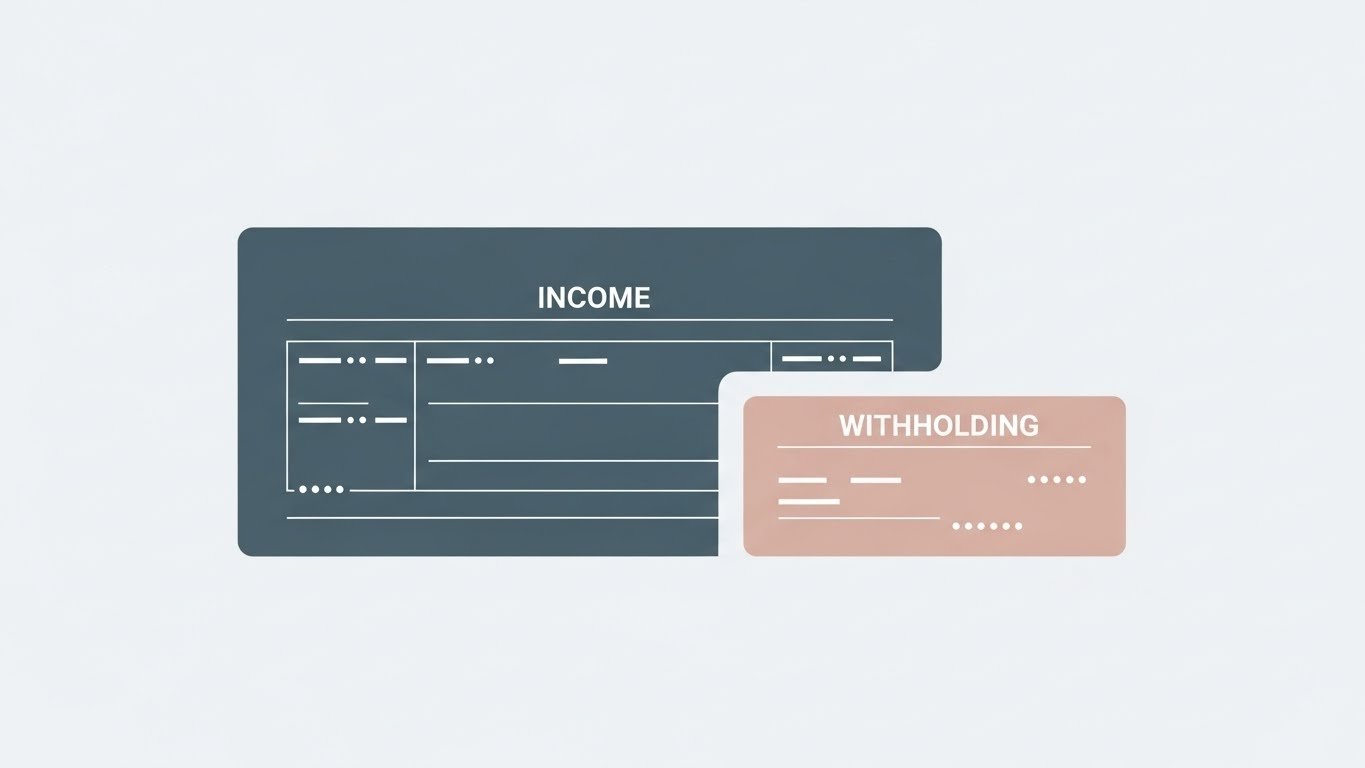
In 2026, many American workers are discovering that their tax withholding no longer matches their income reality. Raises, bonuses, side income, and job changes are leaving gaps that only become visible at filing time — often as unexpected balances owed.
This matters now because automated IRS matching systems are catching discrepancies faster, and under-withholding can quietly compound penalties and interest.
What Tax Withholding Is — and Why It Breaks
Tax withholding is the amount your employer deducts from each paycheck to cover federal income taxes. It’s based on information provided on your W-4 form.
The problem arises when income changes but the W-4 does not.
Common Income Changes That Trigger Under-Withholding
Under-withholding often follows:
- Salary increases or promotions
- Bonuses and commissions
- A second job or side work
- Changes in filing status
- Reduced pre-tax deductions
Each change shifts tax liability, but withholding stays static unless updated.
Why the IRS Flags These Gaps Faster in 2026
The IRS now matches employer-reported income, bonus data, and supplemental income more efficiently. When withholding falls short, the system recalculates expected tax automatically.
The result is smaller refunds — or unexpected bills.
Who Is Most Affected
Workers most exposed include:
- Dual-income households
- Employees with variable compensation
- Professionals receiving bonuses
- Individuals with freelance income on top of wages
Complex pay structures increase risk.
How Under-Withholding Impacts Your Finances
Consequences can include:
- Owing taxes at filing
- Penalties for insufficient withholding
- Interest accruing from the due date
- Cash flow disruptions
The financial impact often arrives all at once.
How to Fix Withholding Before It Becomes a Problem
Corrective steps include:
- Reviewing withholding after income changes
- Updating the W-4 form proactively
- Accounting for bonuses and side income
- Running mid-year tax estimates
Small adjustments per paycheck prevent large year-end bills.
Why Over-Withholding Isn’t the Solution
While increasing withholding avoids surprises, it can reduce monthly cash flow unnecessarily. The goal is accuracy — not giving the IRS an interest-free loan.
Balanced withholding improves both budgeting and predictability.
What to Watch Going Forward
Situations that require a review:
- Job changes
- New dependents
- Loss of deductions
- Changes in benefits
Withholding should be treated as a living setting, not a one-time decision.
Key Takeaway
In 2026, outdated withholding is one of the most common reasons Americans owe unexpected taxes. Keeping withholding aligned with income changes is one of the simplest ways to avoid penalties and protect cash flow.