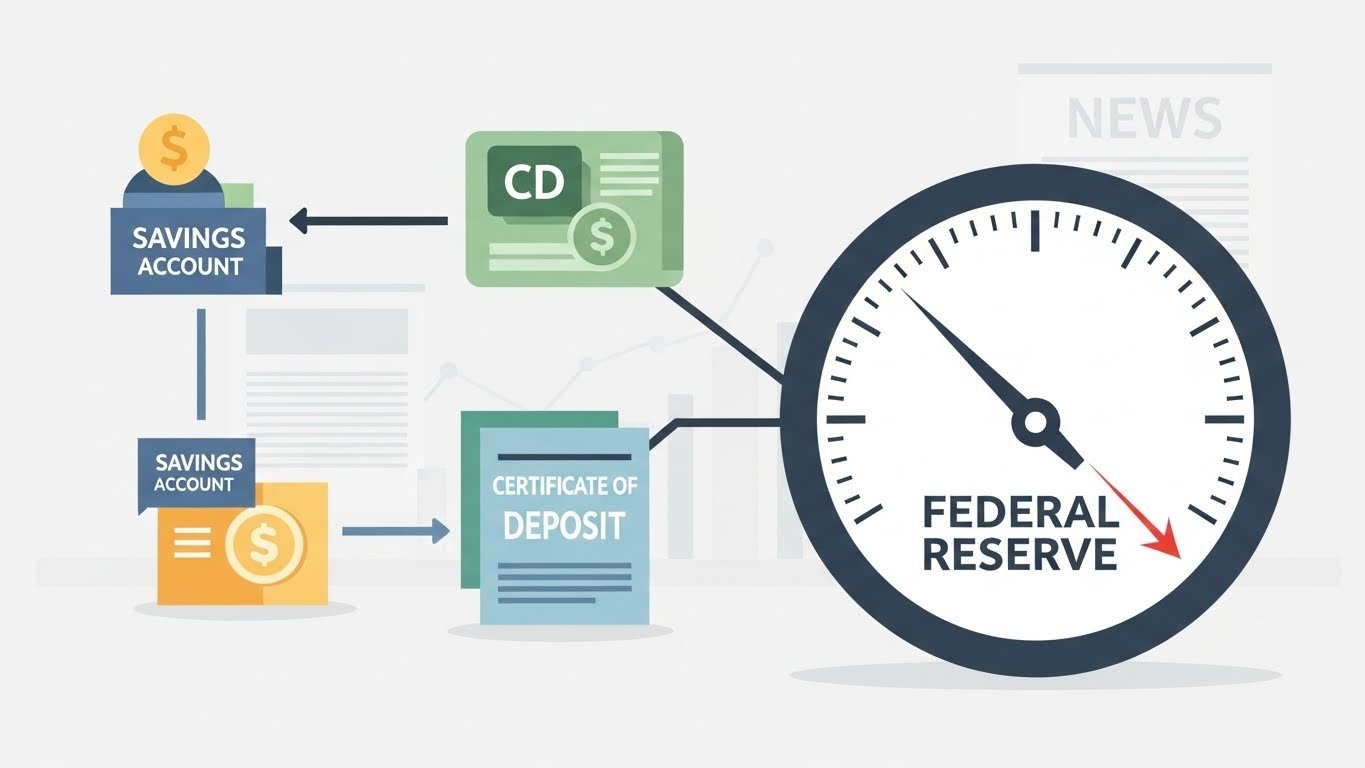
In 2026, signals from the Federal Reserve are reshaping expectations around interest rates. Even before any official move, banks are adjusting yields on savings accounts and certificates of deposit (CDs), changing how much American households earn on cash.
This matters now because millions of savers are holding larger cash balances than in prior years. Rate shifts can materially change returns — quietly and quickly.
Why Rate Expectations Matter Before Any Cut
Banks price deposit rates based on expectations, not just decisions. When markets anticipate lower rates:
- Promotional savings yields are adjusted
- CD offers become more selective
- Variable-rate accounts reprice faster
Savers often feel changes before headlines confirm them.
How Savings Accounts Respond First
High-yield savings accounts typically react early. Banks may:
- Reduce variable APYs
- Limit promotional rates to new customers
- Add balance caps to higher yields
These changes affect everyday liquidity.
What Happens to CDs in a Falling-Rate Environment
CDs lock in rates for a fixed term. In 2026:
- Longer-term CDs become more attractive if rates fall
- Short-term CD yields adjust downward faster
- Banks reduce aggressive CD promotions
Timing matters for those considering locking funds.
Who Benefits From Locking Rates Early
Locking a CD can help:
- Retirees relying on predictable income
- Savers with defined short-term goals
- Households reducing market exposure
Predictability can outweigh flexibility when rates decline.
Who Loses When Rates Drop
Lower rates reduce income for:
- Savers relying on variable-rate accounts
- Households parking large emergency funds
- Individuals expecting yields to remain elevated
Cash returns can fall without any action taken.
How This Affects Household Decisions
Rate shifts influence:
- Where cash is stored
- How long funds are locked
- Whether savings are reallocated
- Short-term budgeting assumptions
Small yield changes compound over time.
Why Banks Move Quickly
Banks aim to:
- Protect margins
- Manage deposit flows
- Anticipate policy shifts
Deposit rates are business decisions, not guarantees.
What to Watch in 2026
Key indicators include:
- Federal Reserve statements
- Changes in savings APYs
- CD term availability
- Bank-specific rate announcements
Monitoring helps avoid surprises.
Key Takeaway
In 2026, expectations around Federal Reserve rate cuts are already affecting savings and CD returns. U.S. households that understand how banks respond to rate signals can make more informed decisions about liquidity, yield, and timing.