
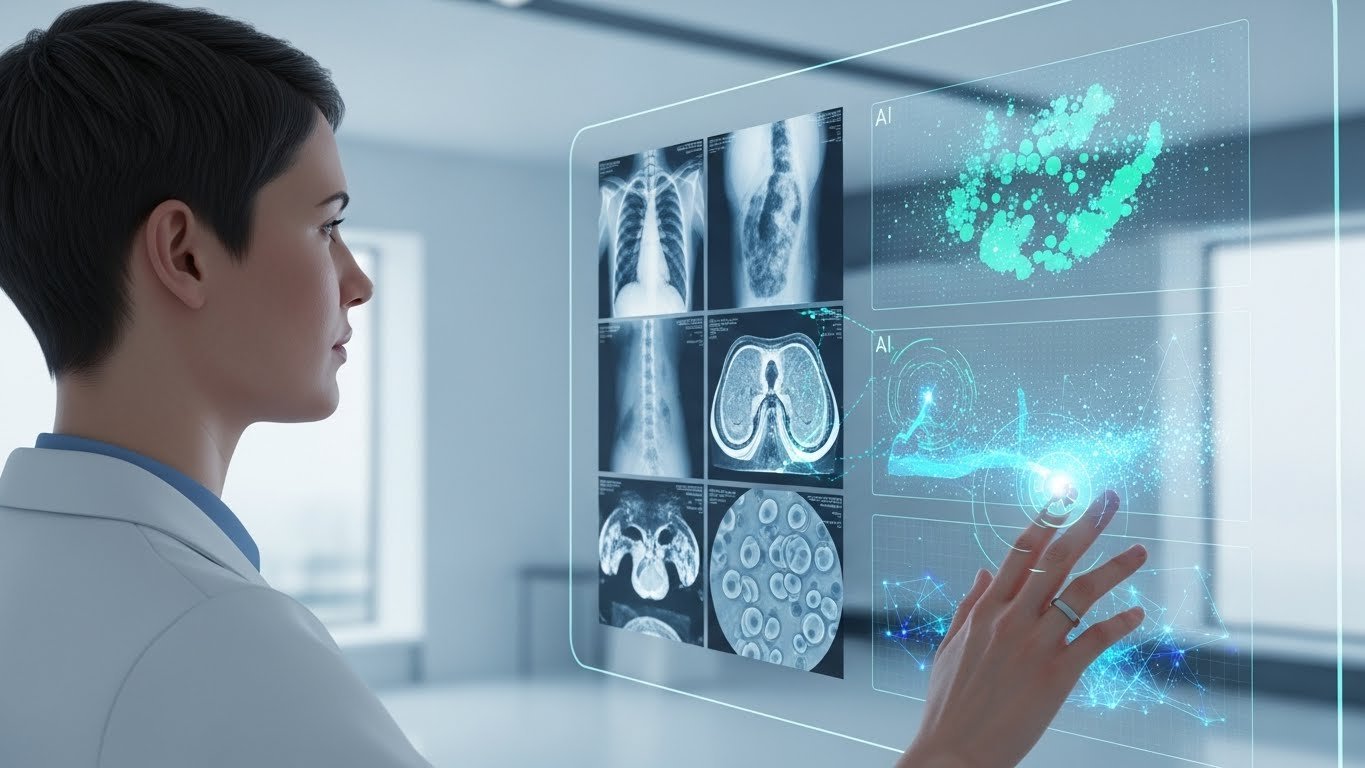
In 2026, artificial intelligence is playing a larger role in medical diagnosis across the United States. From radiology scans to early disease detection, AI tools are increasingly embedded in clinical workflows.
This matters now because rising healthcare costs, physician shortages, and demand for faster diagnoses are pushing hospitals and clinics to rely more on technology — raising important questions about accuracy, access, and oversight.
Why AI Is Being Used More in Healthcare
Healthcare providers are turning to AI due to:
- Growing patient volumes
- Shortages of specialized clinicians
- Rising diagnostic costs
- Pressure to reduce delays and errors
AI systems help process large amounts of data quickly, supporting — not replacing — clinical judgment.
Where AI Diagnosis Is Most Common in 2026
AI-assisted tools are most widely used in:
- Medical imaging (X-rays, MRIs, CT scans)
- Cancer screening support
- Cardiology risk assessment
- Pathology image analysis
These areas involve pattern recognition at scale, where AI performs best.
How AI Improves Diagnostic Efficiency
AI systems can:
- Flag abnormal results earlier
- Reduce repetitive review tasks
- Highlight high-risk cases for priority attention
- Support second opinions
This helps clinicians focus time on complex decision-making.
What AI Still Cannot Do Reliably
Despite progress, AI has limitations:
- It cannot diagnose without quality input data
- It struggles with rare or ambiguous cases
- It lacks contextual understanding of patients
- It does not replace clinical accountability
Human oversight remains essential.
Accuracy, Bias, and Oversight Concerns
AI accuracy depends on training data. If datasets lack diversity, diagnostic recommendations may be less reliable for certain populations.
In 2026, regulators and healthcare systems are placing more emphasis on transparency, validation, and monitoring of AI tools.
How This Affects Healthcare Costs
AI can reduce costs by:
- Lowering repeat testing
- Speeding diagnosis timelines
- Improving early detection
However, upfront investment and integration costs remain high, meaning savings are unevenly distributed.
What Patients Should Understand
Patients may encounter AI-supported diagnoses without direct notice. While AI assists clinicians, final decisions still rest with licensed providers.
Asking how diagnostic tools are used is becoming part of informed care.
Why This Matters for the Healthcare System
AI adoption reshapes workflows, training needs, and liability frameworks. The technology improves efficiency, but only when paired with strong governance.
What to Watch Going Forward
Key developments include:
- Regulatory standards for AI diagnostics
- Independent validation studies
- Integration into insurance coverage decisions
- Provider training requirements
These factors will determine long-term impact.
Key Takeaway
In 2026, AI-assisted diagnosis is becoming a standard support tool in U.S. healthcare. While it improves speed and efficiency, its value depends on careful oversight, quality data, and clear human responsibility.