
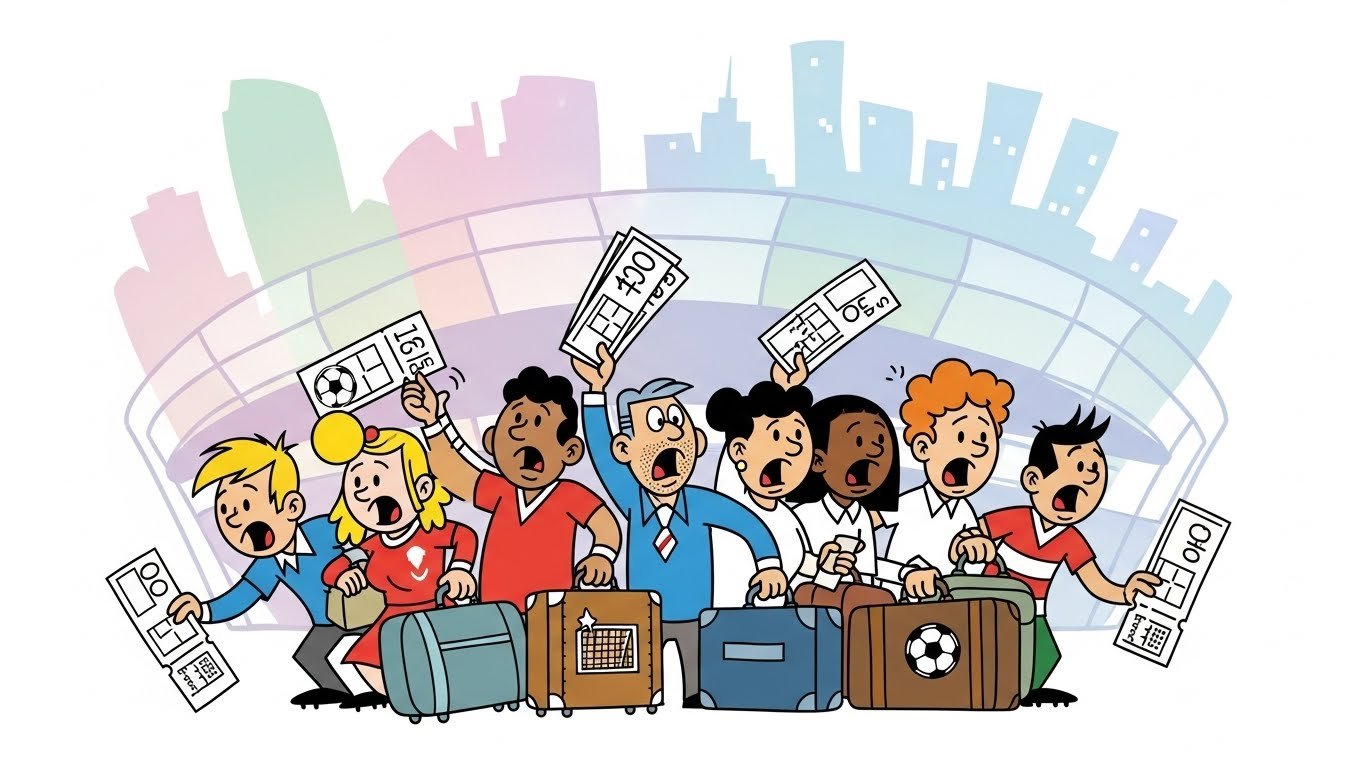
The pricing structure for the upcoming 2026 FIFA World Cup — co-hosted by the United States, Canada, and Mexico — has ignited controversy as fans around the world react to eye-watering ticket costs and a dynamic pricing model that could push expenditures into the thousands for serious supporters.
Ticket sales have reopened in multiple phases, with seats starting at around $60 for group stage matches but climbing dramatically for later rounds and the final. Reports indicate that fans aiming to attend all matches could face total costs far exceeding typical World Cup budgets, due both to high face-value prices and subsequent market dynamics. The Sun+1
1. Dynamic Pricing Drives Ticket Costs Up
FIFA’s ticketing system for the 2026 World Cup includes dynamic pricing, where ticket costs fluctuate based on demand — similar to pricing models used in airlines and hotel industries. Examples from earlier phases show that prices can start low but surge as demand intensifies, especially for high-profile matches and precious seating categories. Reuters
This strategy has drawn criticism from fan groups and political figures alike, who argue that flexible pricing eliminates predictability and fairness in access, making what should be a global celebration increasingly unaffordable for average supporters.
2. Fan Expenses Extend Beyond Match Tickets
Observers note that the financial burden of attending the tournament isn’t limited to ticket costs alone:
- Travel costs and flights to host cities such as Dallas, Boston, and New York have jumped as fans rush to secure seats. The Sun
- Accommodation prices are soaring in response to high demand, with many host destinations reporting hotel rate increases well over historical averages. Bavarian Football Works
- Resale markets could push prices even higher, depending on availability and demand.
All these factors combine to make attending multiple matches a steep investment — with some estimates showing total expenses in excess of £5,000 for group stages alone, and upward of £10,000 or more if a team reaches the final. The Times
3. Travel Enthusiasm Meets Economic Reality
While excitement for the first Americas-hosted World Cup in decades remains high, the economics of attendance reveal a complex landscape. Fans with loyalty programs or priority access may find slightly better pricing, but many critics argue that the current system caters more to wealthier spectators and corporations than to grassroots supporters.
The shift toward demand-based pricing reflects broader trends in live event monetization and logistic planning for global tournaments — but for many football fans, the costs threaten to overshadow the cultural celebration of sport that the World Cup traditionally represents.
The Dollar Pulse Analysis
From a broader perspective, the escalating costs of attending the 2026 World Cup illuminate deeper economic forces at work in global sport. Dynamic ticket pricing, while commercially logical, raises questions about accessibility and equity in flagship events. As travel and lodging expenses rise alongside ticket fees, the financial barrier for fans grows steeper — particularly for supporters from outside host regions.
Consumers considering attendance will need to budget not only for match tickets but also for significant ancillary costs. If dynamic pricing continues as default practice, future large-scale tournaments may see similar patterns, shaping fan expectations and financial planning well beyond 2026.
Sources & Attribution
This article is an independent analysis based on publicly reported information.
Referenced reporting includes:
- World Cup ticket sales and pricing details from current ticket ballots and official phases. The Sun
- Reactions and pricing breakdowns from recent news sources reporting on ticket price bands and fan expenses. The Times
- Accommodation and travel cost data tied to event economics. Bavarian Football Works