
Investing can feel overwhelming — especially in an era defined by market volatility, rapid innovation, and constant economic headlines. But despite uncertainty, investing remains one of the most reliable ways to build long-term wealth. The challenge for most people is not choosing stocks or timing the market. It’s learning the foundational principles that make investing work in the first place.
This guide breaks down the core investing concepts every beginner needs to understand in 2026: how markets behave, how to choose the right investments, and how to grow wealth consistently without unnecessary risk.
Why Investing Matters More Than Ever in 2026
Inflation has reshaped the financial landscape. Money sitting in a savings account loses purchasing power, even with high-yield options. Meanwhile, long-term market returns — through stocks, ETFs, and index funds — historically outpace inflation.
Investing is not optional anymore.
It’s essential for:
• Retirement planning
• Wealth building
• Beating inflation
• Funding long-term goals
• Achieving financial independence
The sooner you start, the easier it becomes.
How the Market Really Works
Markets grow over time despite downturns. They move in cycles — expanding, contracting, and recovering. What confuses beginners is volatility, which feels like risk but is actually a normal part of investing.
Key truths:
• Markets rise more often than they fall.
• Downturns are temporary, but growth is permanent.
• Time in the market beats timing the market.
• Diversification reduces emotional stress and financial risk.
Understanding this removes fear and builds confidence.
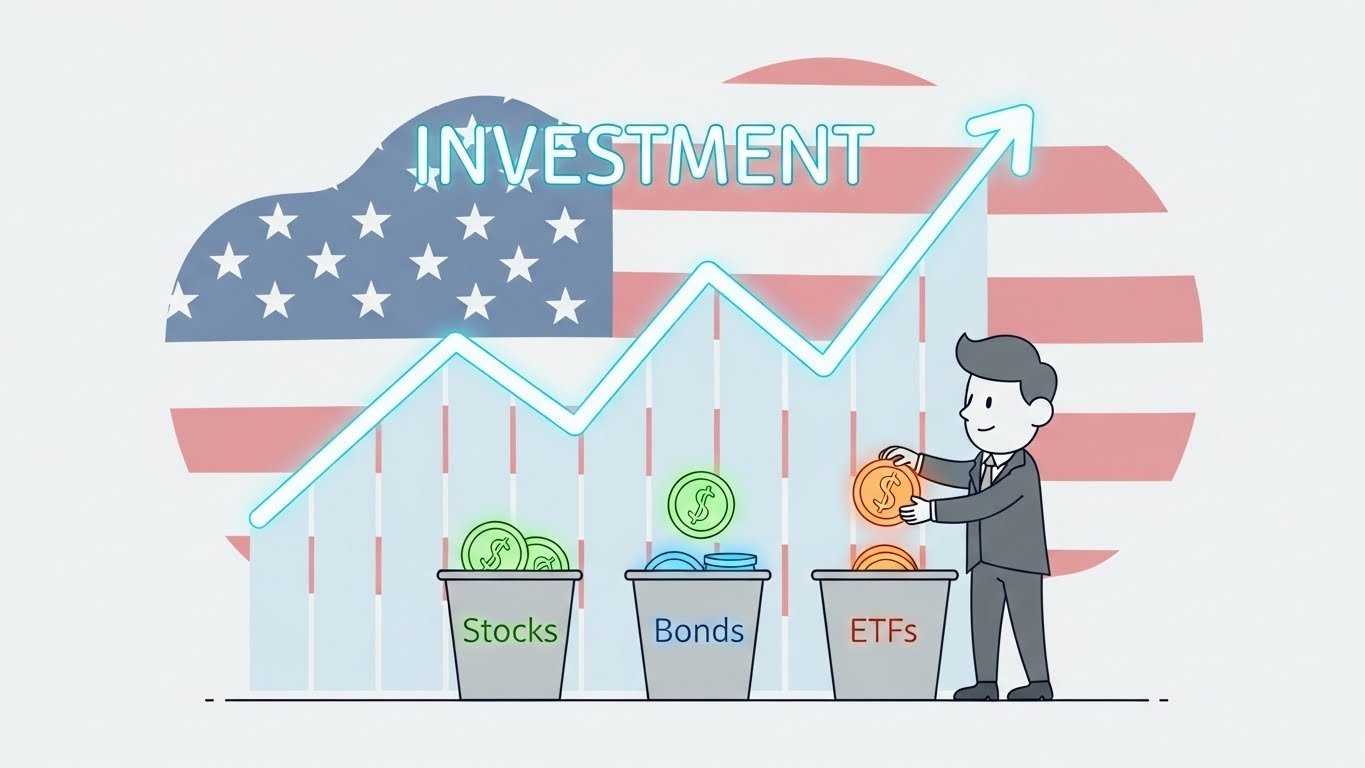
The Three Investment Vehicles Every Beginner Should Know
1. Stocks
Ownership shares in a company. Higher growth potential but higher volatility.
2. Bonds
Loans to governments or corporations. Lower risk, lower return, good for stability.
3. Index Funds & ETFs
Bundles of stocks or bonds you can buy in one purchase.
They offer:
• Diversification
• Low fees
• Long-term growth
• Minimal decision-making
Most experts agree ETFs and index funds are the smartest starting point for beginners.
How to Build a Simple, Effective Investment Portfolio
The most popular approach in 2026 is the Core-and-Satellite Strategy:
Core (70–90%):
Broad-market ETFs — like S&P 500, total market, or global ETFs.
Purpose: long-term, stable, low-cost growth.
Satellite (10–30%):
Additional investments based on your goals:
• Tech ETFs
• Dividend stocks
• Bonds
• International markets
• Real estate funds
This approach gives you structure + flexibility.
How Much Should You Invest?
General benchmarks for beginners:
• 5% of income = slow, steady start
• 10–15% = standard wealth-building range
• 20%+ = accelerated growth
If budgets feel tight, start small. Consistency matters more than contribution size.
Risk: What It Actually Means
Risk isn’t just losing money — it’s uncertainty.
Three dimensions to understand:
1. Time Risk:
Short-term investing is risky. Long-term investing is safer.
2. Concentration Risk:
A portfolio with only one type of investment can collapse quickly.
3. Emotional Risk:
Selling during downturns destroys long-term returns.
Discipline is the real edge.
Common Mistakes That Hurt New Investors
Avoid these traps:
• Trying to time the market
• Holding too much cash
• Chasing hype investments
• Ignoring fees
• Not diversifying
• Investing without an emergency fund
• Panicking during downturns
Every mistake above is preventable with a plan.
How to Start Investing in 2026 — Step by Step
- Build an emergency fund
- Choose a brokerage or robo-advisor
- Start with index funds or ETFs
- Schedule automatic contributions
- Add satellite investments slowly
- Rebalance once or twice a year
- Avoid reacting emotionally to headlines
Investing is a system, not a gamble.
TheDollarPulse Analysis
Investing is not about predicting the future — it’s about preparing for it. The most successful investors follow a simple formula: diversify, automate, contribute consistently, and stay invested through volatility.
The key takeaway:
You don’t need to be wealthy to start investing — but you do need to start investing to become wealthy.
With the right habits, even small contributions today can transform into long-term financial freedom. In 2026, anyone can build wealth — as long as they understand the basics and take the first step.