
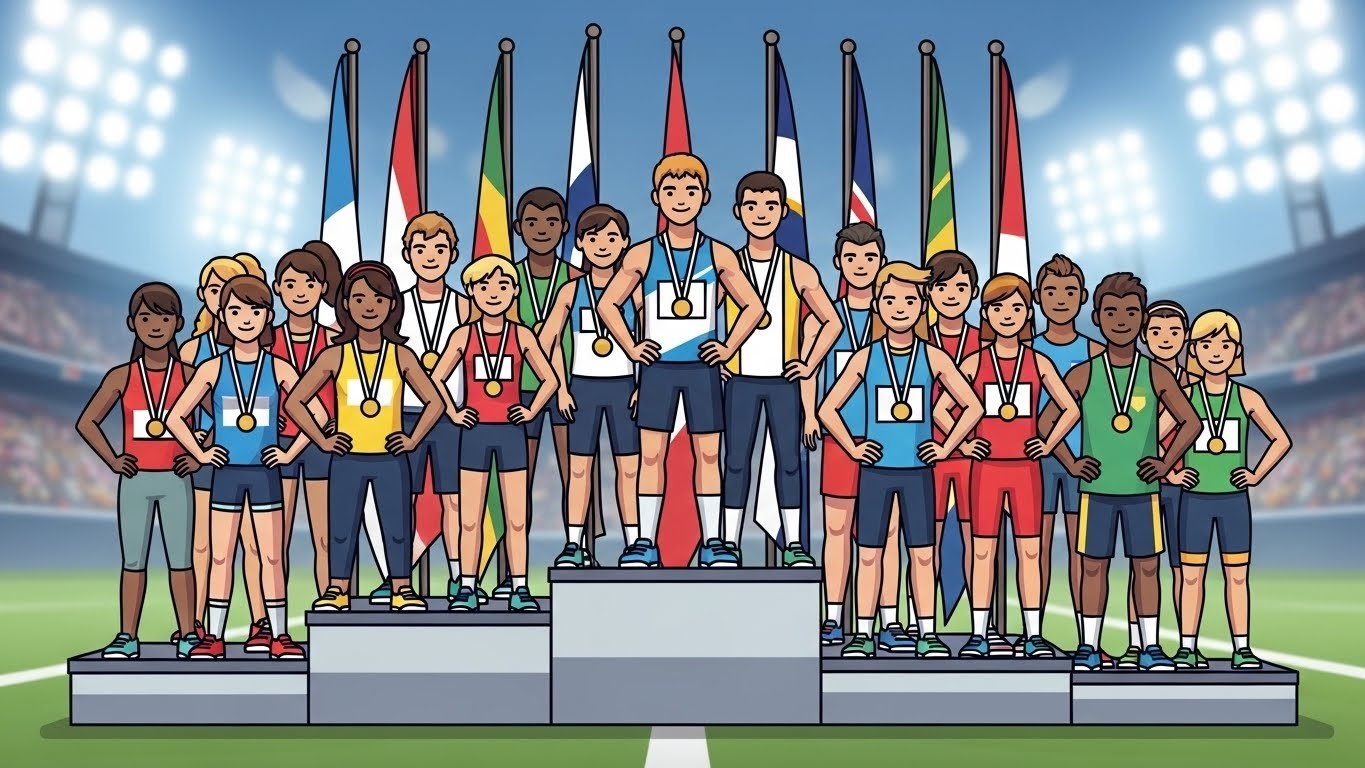
In a major development at the International Olympic Committee (IOC) Summit, the IOC has advised that Russian and Belarusian youth athletes should be allowed to compete under their national flags and anthems in international sporting events, signaling a potential shift in how global sport navigates political sanctions and athlete participation ahead of key future competitions.
The move has stirred both support and controversy across the global sports community as organizers balance fairness, politics, and inclusion. AP News
1. What Changed at the Olympic Summit?
The IOC, under the leadership of President Kirsty Coventry, issued new guidance recommending that Russian and Belarusian youth competitors be permitted to participate with full national symbols — flags and anthems — in youth international events. This marks a change from previous restrictions that required athletes from these countries to compete as neutrals due to geopolitical concerns stemming from broader bans in senior competition. AP News
Importantly, this guidance does not yet extend to adult athletes or major Olympic programs such as the 2026 Winter Olympics in Milan–Cortina, where Russian and Belarusian athletes will remain eligible only as neutrals under strict conditions. AP News
2. Why This Matters Across Global Sports
This decision is significant for several reasons:
Youth Development and Inclusion
Youth events are often the training ground for future elite champions. Allowing young athletes to compete under their national flags may:
- enhance their sense of identity and pride
- maintain continuity in international rankings
- support holistic athletic development
Political and Ethical Debate
The IOC’s guidance seeks to walk a delicate balance — preventing political interference in athletic careers while acknowledging ongoing geopolitical tensions. Some nations support full reintegration for young competitors, while others argue that restrictions should remain tied to governmental policies. AP News
3. What This Means for Upcoming Events
With several major youth competitions on the horizon — including qualifiers and development tournaments for the 2028 Summer Olympics — this policy shift could reshape team rosters, competitive balance, and even fan engagement in regions long affected by international restrictions. AP News
However, the IOC emphasized that official sanctions and exclusions of government officials remain in force. This indicates ongoing caution in larger geopolitical arenas, even as youth athletes see expanded opportunities. AP News
4. The Dollar Pulse Sports Insight
Sporting governance frequently finds itself at the crossroads of competition and politics. The IOC’s recommendation reflects a nuanced strategy: protect the rights of individual athletes, especially young competitors, while maintaining broader sanctions and political pressures at the institutional level.
This topic resonates with fans, federations, and policymakers because it touches on:
- fairness and inclusivity in sport
- geopolitical influence on athletic participation
- long-term impacts on youth talent pipelines
- potential shifts in future Olympic and world championship alignments
As major sporting bodies consider responses, fans can expect ongoing debate and potential policy refinements in 2026 and beyond.
This article contains original reporting and analysis based on publicly available news coverage.
Referenced reporting:
- AP News, IOC advises sports bodies to let Russians compete in youth events again with flag and anthem (Dec. 11, 2025). AP News
Sources are cited strictly for transparency and credibility.