
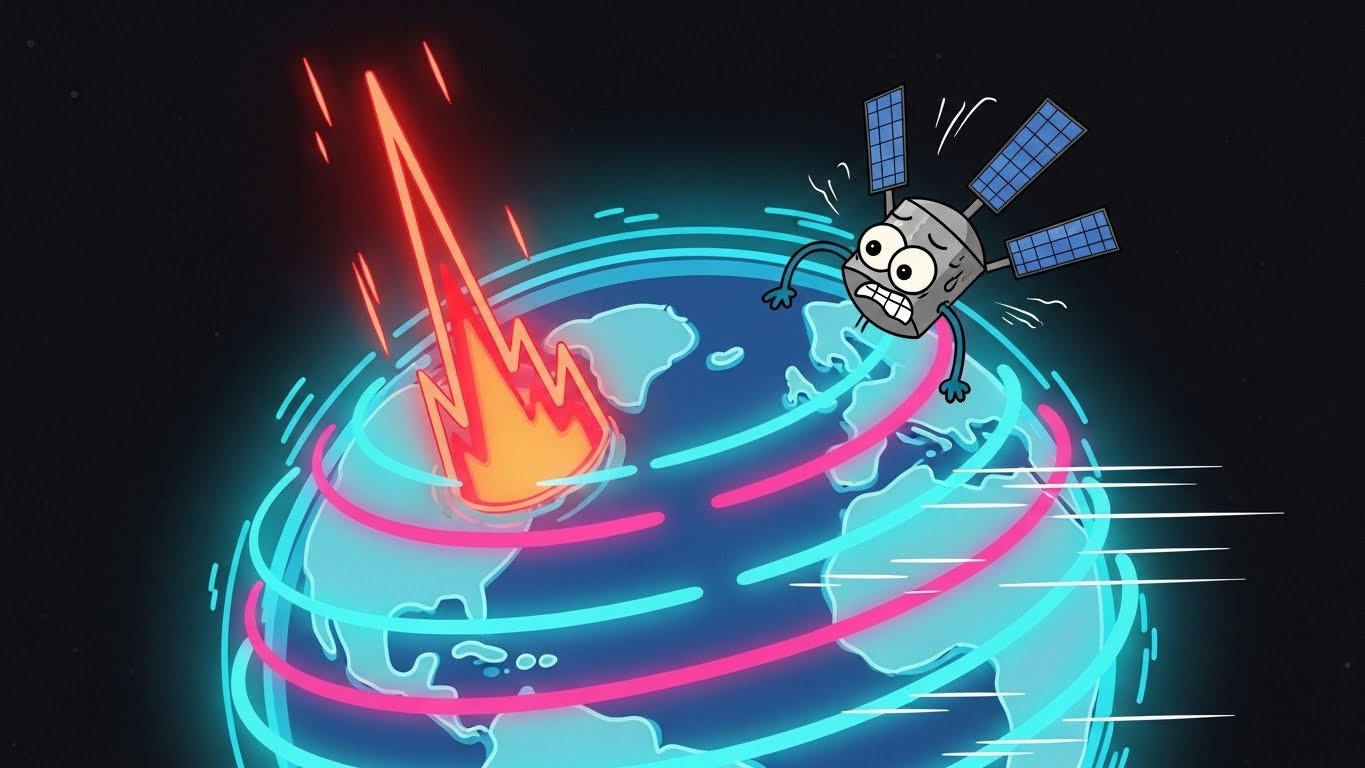
A team of atmospheric scientists has identified an unexpected temperature spike in Earth’s upper atmosphere, and the discovery is raising urgent questions. Satellite instruments detected a sharp rise in thermospheric temperatures over the past 10 days — a pattern not linked to typical solar activity, geomagnetic storms, or seasonal variation.
Researchers say the anomaly appears in a region above the Pacific, stretching thousands of kilometers across altitudes where satellites orbit. The spike is large enough that several satellites have already reported increased atmospheric drag, forcing operators to adjust trajectories earlier than planned. Space agencies in the U.S., Europe, and Japan are now collaborating to map the full extent of the disturbance.
What makes this alarming is the absence of a clear explanation. Normally, such temperature shifts correlate with strong solar flares or radiation bursts — but recent solar readings show no major events. Some researchers speculate the spike could be the result of subtle magnetic field fluctuations, while others suggest an unknown atmospheric chemical reaction.
If the anomaly persists, it could disrupt satellite paths, increase fuel consumption, and interfere with communications. For scientists, it’s a rare real-time mystery — and one that could reshape our understanding of Earth’s upper-atmospheric behavior.
The world waits for answers, but for now, the phenomenon remains unsolved.