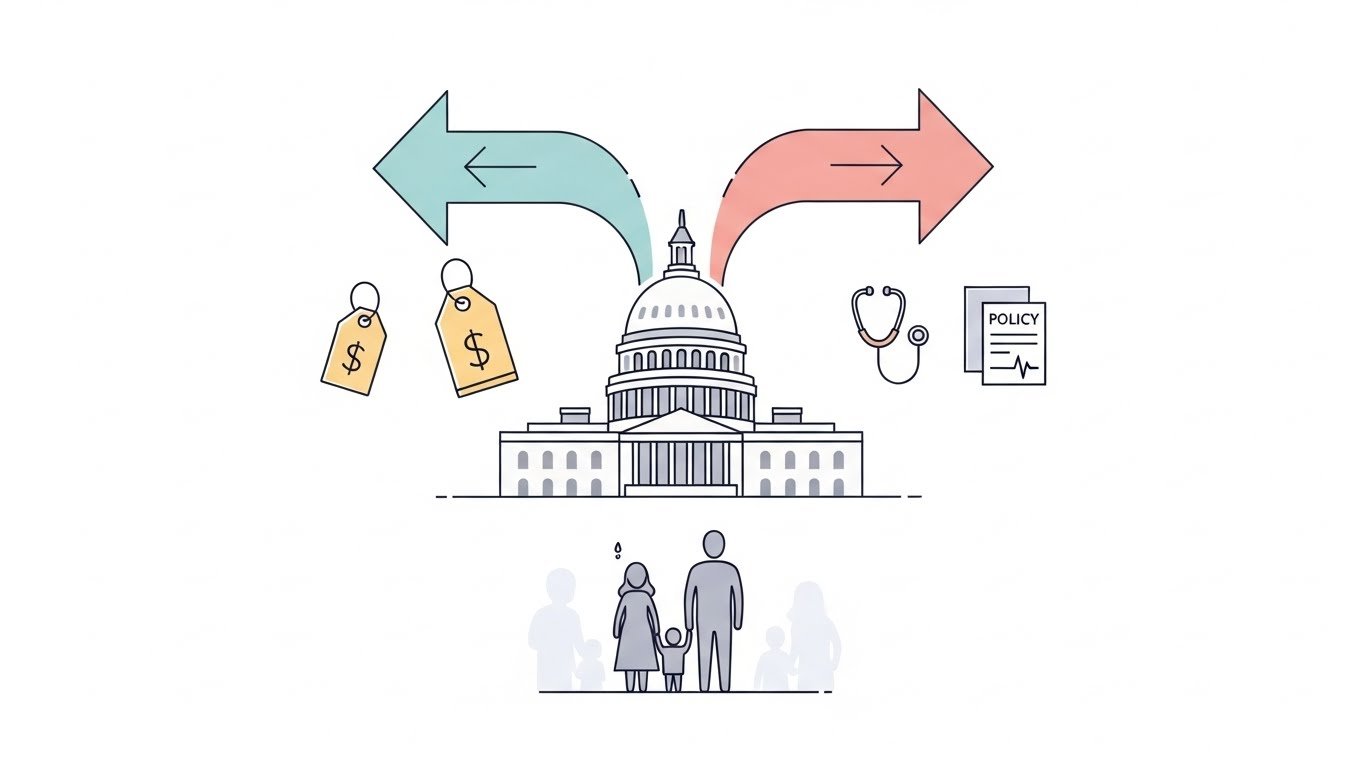
The U.S. Senate has failed to advance competing health care proposals aimed at extending or replacing key insurance subsidies under the Affordable Care Act (ACA), leaving the future of health insurance costs for millions of Americans in limbo as 2026 approaches. ABC News+1
Lawmakers from both parties brought forward rival proposals — one supported by Democrats to extend enhanced ACA premium subsidies and another backed by Republicans that would shift federal support into Health Savings Accounts — but neither plan secured the 60 votes needed in the Senate to move forward. ABC News
With the enhanced subsidies set to expire at the end of the year, many Americans could face significant increases in insurance premiums and out-of-pocket costs in the coming year unless Congress acts quickly. AP News
What Does the Senate Vote Deadlock Mean?
1. Competing Proposals Couldn’t Advance
The Democratic proposal sought to extend enhanced ACA tax credits for three years, helping to keep premiums lower for people who purchase coverage through the ACA exchanges. AP News
The Republican alternative, championed by Senators Bill Cassidy and Mike Crapo, aimed to deposit yearly federal contributions into Health Savings Accounts (HSAs) for eligible individuals, redirecting federal support without directly subsidizing premiums. Wall Street Journal
However, both measures failed to secure the 60 votes required to avoid Senate filibuster rules, highlighting deep partisan divisions and leaving lawmakers without a clear path forward. AP News
Who Is Affected and How?
Millions at Risk of Higher Premiums
Enhanced subsidies — implemented during the COVID-era to help make coverage more affordable — have lowered monthly insurance costs for tens of millions of Americans. With those subsidies scheduled to expire December 31, 2025, failure to extend them could mean:
- premium spikes for ACA enrollees
- higher out-of-pocket costs
- increased financial strain on lower- and middle-income households
- greater demand on emergency and safety net healthcare services
Experts warn that without immediate legislative action, millions will see their healthcare bills rise sharply in early 2026. AP News
Political Impasse and Health Costs
The deadlock reflects broader disagreements on how to provide affordable health care:
- Democrats insist that extending subsidies is essential to prevent cost increases and maintain coverage levels. Wall Street Journal
- Republicans argue that redirecting funds into HSAs gives individuals more choice and control, though critics say it could lead to higher personal expenses. KRNV
With neither side able to command a filibuster-proof majority in the Senate, the impasse may require compromise in early 2026 — or could force temporary extensions through separate budget negotiations.
The Dollar Pulse Health Alert
This legislative stalemate is not just political — it carries real, immediate financial implications for anyone who buys health insurance outside of employer plans or Medicare and Medicaid systems.
If enhanced subsidies lapse:
- monthly premiums could rise sharply, especially for middle-income earners
- Americans may delay care due to cost pressures
- more people could rely on emergency departments for primary care
- overall national health expenditures may increase
2026 could start with a healthcare cost shock unless decisive action is taken — making monitoring these developments essential for personal financial planning and insurance budgeting.
⭐ Sources & Attribution (AdSense-Friendly)
This article contains original reporting and analysis based on publicly available news coverage.
Referenced reporting:
- ABC News, Senate poised to cast votes on competing health care proposals (Dec. 11, 2025). ABC News
- Associated coverage on competing health care proposals failing in the Senate. AP News
Sources are cited solely for transparency and context.