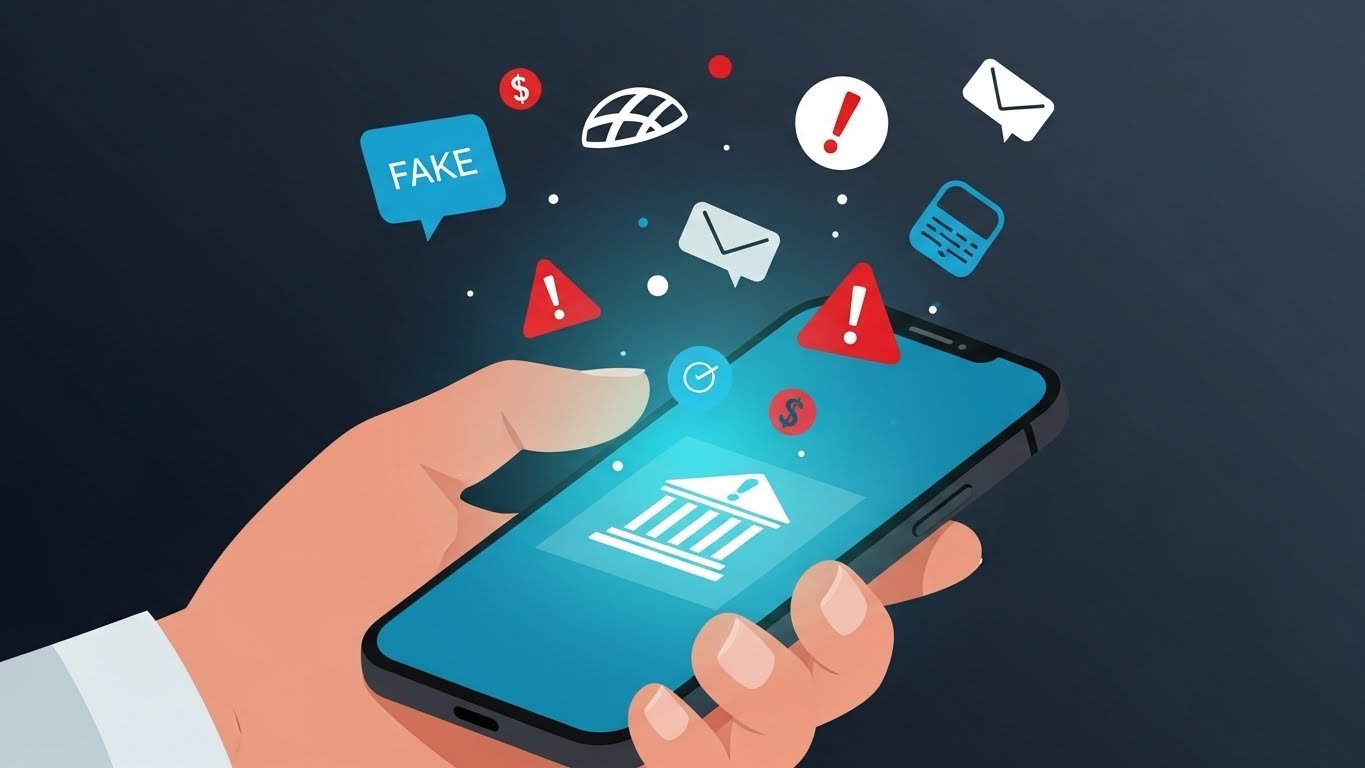
Financial scams are evolving faster than ever, and 2025 has already seen a sharp rise in banking-related fraud across the United States. From fake bank texts to unauthorized withdrawals and sophisticated phishing attempts, criminals are targeting everyday consumers in ways most people don’t expect.
If you’ve received strange alerts from your bank, unusual login notifications, or suspicious calls pretending to represent financial institutions, you are not alone. This year has already delivered one of the largest spikes in fraud reports in recent history — and the trend is accelerating.
Here’s what’s happening, why it matters, and what you must do right now to protect your money.
Why Banking Scams Are Exploding in 2025
Experts point to three major reasons behind the surge:
1. Increased digital banking usage
More people are using mobile apps and online banking, giving scammers a larger target pool.
2. More realistic scam messages
Fake emails and SMS messages look almost identical to official bank communications.
3. Data leaks across multiple industries
Large-scale data breaches have made it easier for scammers to access personal information, making their attacks more convincing.
Criminals no longer send poorly written emails — they send near-perfect copies of real notifications from major banks.
1. The Fake Bank Text Message Scam (Most Common in 2025)
This is currently the #1 banking scam in the U.S.
Victims receive a text that looks like it came from their bank:
- “Unusual activity detected on your account.”
- “Your debit card has been locked.”
- “Confirm your transaction immediately.”
When you click the link → it takes you to a fake login page.
If you enter your details, scammers get instant access to your bank account.
How to identify fake alerts:
- Banks never ask you to confirm personal data via text.
- Check the link — fake ones often have extra characters or strange domains.
- If unsure, call your bank using the number on the back of your card.
2. Unauthorized Withdrawals from Linked Apps
In 2025, scammers increasingly target apps connected to your bank account, such as:
- payment apps
- delivery services
- ride-sharing apps
- subscription platforms
If criminals access one app, they may be able to withdraw funds or make charges through it.
Warning signs:
- Small “test” charges
- Random subscriptions
- Payments you don’t recognize
- Notifications of login attempts
Most people ignore small charges — but they often indicate a larger attack coming.
3. Spoofed Bank Calls (Highly Sophisticated)
Scammers are using technology that allows them to fake caller ID, making it appear as if your bank is calling.
The scammer then:
- Claims your account is compromised
- Asks you to “verify” details
- Requests your debit card information
- Asks you to read a verification code “to confirm identity”
⚠️ That verification code is usually the code needed to reset your online banking password.
How to protect yourself:
If someone calls you claiming to be your bank:
- Hang up
- Call back using the number on your card
- Never share one-time codes
Banks will never ask for your full password, PIN, or verification code.
4. Fake ATM Skimmers in New Locations
ATM skimmers are devices installed on card readers that steal card information.
In 2025, scammers have been placing skimmers in:
- grocery store ATMs
- gas stations
- mall ATMs
- even some bank branch vestibules
These devices are nearly invisible — and some use Bluetooth to transfer stolen data instantly.
How to stay safe:
- Tug on the card reader before inserting your card
- Use ATMs inside bank branches when possible
- Enable instant transaction alerts
- Cover the keypad when entering your PIN
5. The “Guaranteed Loan Approval” Debt Scam
With rising interest rates and financial stress, scammers are targeting people looking for loans or debt relief.
They promise:
- guaranteed approval
- super low interest rates
- “federal forgiveness programs”
These are fake.
Victims are asked to:
- pay upfront fees
- provide bank login information
- give Social Security numbers
How to avoid it:
- No legitimate lender guarantees approval
- No real program requires upfront payment to “release” funds
- Check lenders on official government or financial websites
6. How to Protect Your Money Right Now
Here are the most effective steps you can take today:
✔ Enable two-factor authentication on your bank accounts
Prefer app-based codes instead of SMS.
✔ Turn on real-time transaction alerts
Instant notifications catch suspicious charges early.
✔ Use unique passwords for banking
Never reuse passwords from other accounts.
✔ Review statements weekly
You’ll spot unusual activity before scammers gain full access.
✔ Freeze your debit card when not using it
Most banking apps allow instant freeze/unfreeze.
✔ Keep your phone and apps updated
Out-of-date software is easier to exploit.
✔ Avoid clicking links in emails or texts
Always navigate manually to your bank’s website.
What To Do If You Think You Were Targeted
If you suspect fraud:
- Immediately freeze your card
- Change your online banking password
- Enable 2FA
- Report suspicious transactions
- Contact your bank’s fraud department
Most banks reimburse fraudulent charges if you report them quickly.
FAQs
1. Why are scams increasing so quickly in 2025?
More digital banking users and more data leaks create perfect conditions for fraud.
2. How do scammers get my phone number?
Data breaches, leaked databases, app sign-ups, and public information.
3. Can scammers steal my money without my password?
Yes — through spoofed apps, unauthorized linked services, or stolen card details.
4. What is the safest way to bank in 2025?
Use official mobile apps, strong passwords, 2FA, and real-time alerts.
5. Should I change banks if this keeps happening?
If your bank isn’t protecting you effectively, it may be worth considering.
Conclusion
Financial scams aren’t just increasing — they’re evolving.
The best defense is awareness, fast action, and strong digital habits.
By taking a few strategic steps today, you can protect your money, your accounts, and your identity in a world where scams are becoming more sophisticated every month.
Stay alert. Stay secure.
Your finances depend on it.