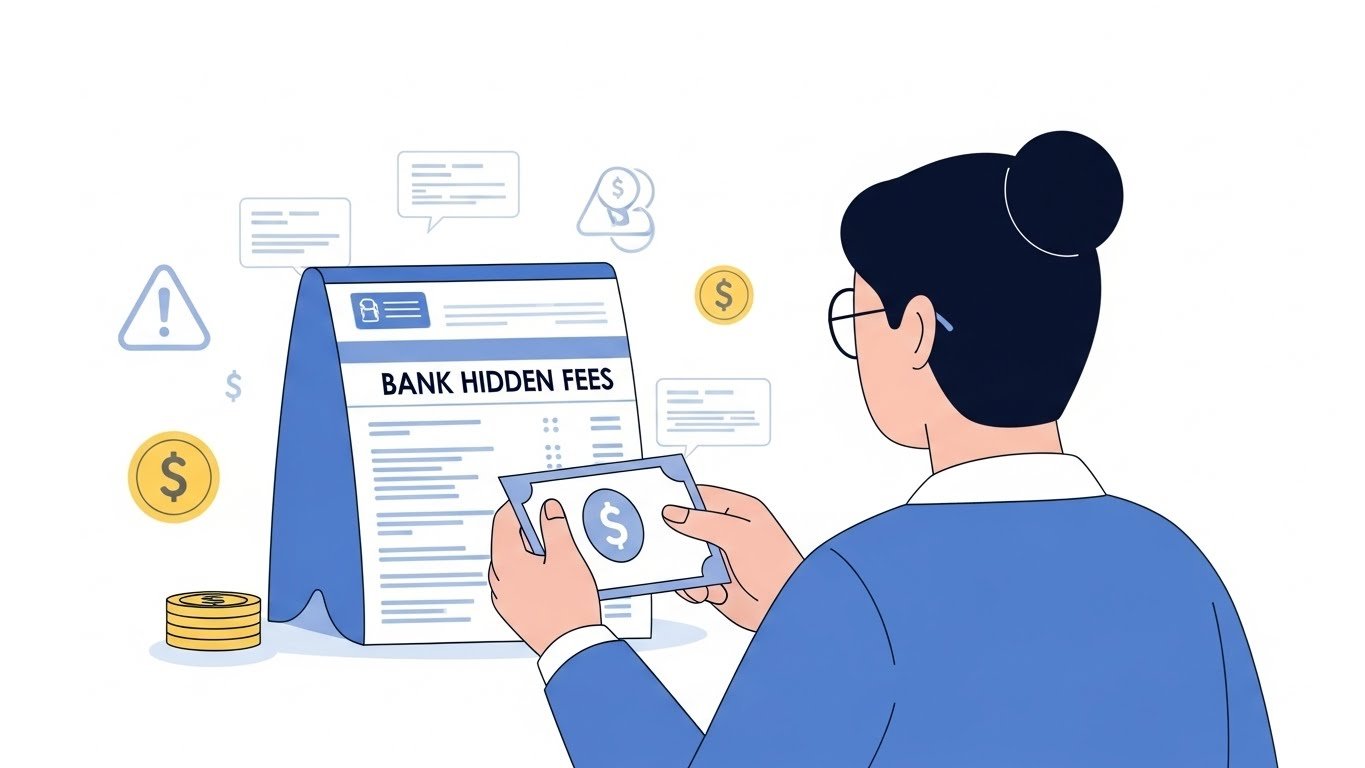
Managing your money is much easier when you understand how your bank really works. While most people focus on interest rates and account features, the real cost of banking often comes from something less visible: hidden fees. These charges seem small at first, but over time they can eat away hundreds of dollars from your balance each year.
If you’ve ever wondered why your account drops suddenly or why your bank charges you for something that feels unfair, this guide will show you exactly what’s happening — and how to stop it.
Why Banks Charge These Fees
Banks rely on several revenue sources: loans, interest, credit card products, and yes — fees.
But not all fees are obvious. In fact, many people aren’t even aware they’re being charged until they check their statements.
Most hidden banking fees occur because of:
- Automatic account conditions
- Low-balance requirements
- Transaction limits
- Overdraft policies
- ATM networks
- International usage rules
Understanding each type helps protect your money.
1. Monthly Maintenance Fees
Many banks charge a monthly account fee simply for holding your money.
These fees often range from $8 to $15, but premium accounts can go above $25.
Why it happens:
Banks use maintenance fees to offset operational costs and encourage customers to meet specific conditions.
How to avoid it:
- Choose a free checking account (many online banks offer them).
- Set up direct deposit (often cancels the fee automatically).
- Maintain the minimum balance required by the bank.
- Check if students or first-time customers qualify for fee waivers.
2. Overdraft & NSF Fees
Overdraft fees are some of the most expensive charges in banking.
Many U.S. banks charge $30 to $35 per overdraft, and they may charge it multiple times in one day.
Common scenarios:
- A small purchase drops your account below zero
- Automatic payments hit unexpectedly
- Bank processes larger transactions first, triggering multiple fees
How to avoid it:
- Opt out of overdraft programs
- Use low-balance alerts
- Keep a buffer of $50–$100
- Use a bank that offers no-overdraft accounts
3. ATM Fees (In-Network vs. Out-of-Network)
Using an out-of-network ATM can cost:
- Your bank’s fee: $2.50 – $5.00
- ATM operator’s fee: $2.00 – $4.00
Some people end up paying $7–$9 just to withdraw cash once.
How to avoid it:
- Use your bank’s ATM locator app
- Switch to a bank offering unlimited ATM reimbursements
- Use cash-back options at grocery stores instead of ATMs
4. International Transaction Fees
Traveling or shopping online from foreign merchants can trigger:
- Foreign transaction fees (1%–3%)
- Currency conversion fees
- International ATM withdrawal fees
These add up very quickly.
How to avoid it:
- Use a debit or credit card with no foreign transaction fees
- Withdraw larger amounts at once while traveling
- Use digital wallets with lower conversion fees
5. Excess Withdrawal Fees (Savings Accounts)
Savings accounts traditionally allow only six withdrawals per month.
Exceeding this limit can trigger a $5–$15 fee per extra withdrawal.
How to avoid it:
- Keep savings and spending strictly separate
- Use checking accounts for frequent transactions
- Automate transfers strategically
6. Paper Statement Fees
Some banks charge $2–$5 per month if you request printed statements.
How to avoid it:
- Switch to electronic statements
- Download and store your PDFs for personal records
7. Inactivity Fees
If you don’t use your account for several months, some banks charge inactivity fees — usually $5 to $10 per month.
How to avoid it:
- Automate a monthly transfer
- Close unused accounts
- Use online banks that don’t penalize inactivity
8. Returned Deposit Fees
If someone pays you with a check that later bounces, the bank may charge $10–$15 even though it wasn’t your fault.
How to avoid it:
- Deposit checks from trusted sources
- Use mobile deposit to speed up verification
- Encourage digital payments instead of checks
How to Choose a Bank That Doesn’t Drain Your Money
The right bank should protect your money — not charge you endlessly.
Look for these features:
✔ No monthly maintenance fees
✔ No overdraft fees or low overdraft caps
✔ Large ATM network or unlimited reimbursements
✔ No foreign transaction fees (ideal for travelers)
✔ Clear, transparent terms
✔ High-yield savings accounts
Online banks often offer fewer fees because they operate with lower overhead costs.
Red Flags That Your Bank Is Overcharging You
If you notice any of these, it’s time to reconsider your bank:
- Frequent small fees that don’t make sense
- New fees appearing without explanation
- High overdraft penalties
- Hard-to-meet minimum balance requirements
- Difficult customer service
You deserve a bank that supports your financial growth — not one that profits from your mistakes.
FAQs
1. What is the most common hidden banking fee?
Monthly maintenance and overdraft fees are the most frequent and expensive.
2. Are online banks safer than traditional banks?
Yes. Most online banks are FDIC-insured and follow the same regulations as traditional banks.
3. Can I negotiate bank fees?
Sometimes — especially overdraft or maintenance fees. Calling customer service can help.
4. Do credit unions charge fewer fees?
Generally yes. Credit unions often have lower fees and better customer service.
5. Should I switch banks if I’m being charged too much?
If fees are consistent and unavoidable, switching banks can save hundreds of dollars per year.
Conclusion
Banking fees may seem small, but over time they can silently drain your money. By understanding how banks really operate — and choosing the right account — you can avoid unnecessary costs and keep more of your hard-earned cash.
If you want your bank to work for you instead of against you, start paying close attention to the fees hidden in the fine print. A few smart changes can protect your finances for years to come.