
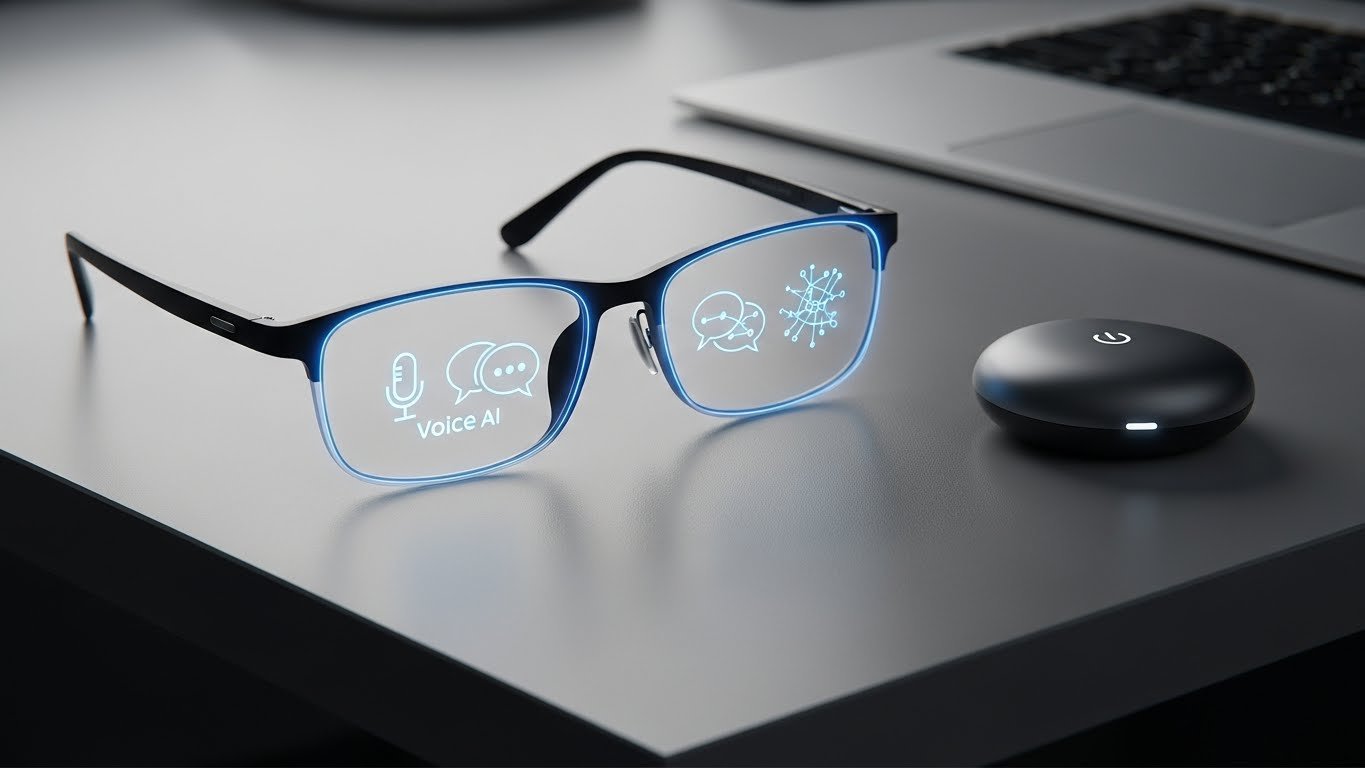
A new generation of AI-powered wearable devices is rapidly reshaping the consumer tech market, signaling the most significant shift in personal technology since the first smartphone era.
Smart glasses, AI pins, wrist-mounted assistants, and real-time translation devices are becoming mainstream as major companies race to build the next always-on personal computing platform.
Driven by advances in compact neural processors, low-energy AI chips, and conversational agents capable of running on-device, AI wearables are transforming how people interact with information, entertainment, and the world around them.
1. What Are AI Wearables — And Why They Matter Now
AI wearables differ from traditional smartwatches or earbuds because they support:
- continuous speech understanding
- context-aware recommendations
- real-time translation and summarization
- vision-based scene recognition
- hands-free conversational agents
- on-device AI processing (no cloud dependency)
This shift enables a type of ambient computing where users interact with technology without screens, simply by speaking or gesturing.
The transition is driven by advances in NPUs (Neural Processing Units) small enough to fit into glasses, pins, and earbuds without overheating or draining battery life.
2. The Companies Leading the New Tech Revolution
1. Google
Expanding its AI glasses program with improved translation, live directions, and real-time object detection.
2. Meta
Investing heavily in AI eyewear with voice assistants integrated into Ray-Ban models.
3. Apple
Developing ultra-light smart glasses powered by the same neural engine found in its iPhone and Vision Pro lineup.
4. OpenAI-aligned startups
Pushing conversational computing with screenless “AI pins” designed to replace the smartphone for core daily tasks.
5. Samsung & Qualcomm
Building AI-first wearable ecosystems integrated across phones, homes, and productivity tools.
This competition is accelerating innovation and lowering manufacturing costs.
3. What Consumers Can Expect in 2026
AI wearables are poised to deliver:
✔ Real-time language translation directly in your ear
✔ Instant answers without reaching for a phone
✔ Automatic summarization of conversations and meetings
✔ Live visual assistance for navigation, shopping, and accessibility
✔ Hands-free messaging and calls
✔ Personalized coaching for fitness, productivity, and learning
✔ Adaptive notifications based on context and behavior
Industry analysts predict that by the end of 2026, AI wearables could replace 15–20% of daily smartphone interactions.
4. Why This Is a Multi-Billion Dollar Category
The shift is being fueled by:
- rising demand for convenience
- screen fatigue
- rapid advances in tiny low-power AI chips
- new monetization models using voice-first interfaces
- increasing enterprise use for training, safety, and remote assistance
AI wearables also appeal strongly to younger demographics seeking lightweight, minimalist, frictionless tech.
Experts estimate the global AI wearable market could exceed $45–60 billion by 2028 if adoption accelerates.
5. The Dollar Pulse Tech Insight
AI wearables represent the first serious challenge to the smartphone’s dominance in over a decade.
The winners of this new hardware race won’t be defined only by industrial design — but by:
- who builds the best on-device AI
- who reduces power consumption the fastest
- who delivers the most natural voice interface
- who offers the deepest ecosystem integration
2026 is shaping up to be the year technology becomes truly ambient — always present, always listening, always contextual — without needing to be held in your hand.
⭐ Sources & Attribution (AdSense-Friendly)
This article contains original analysis based on publicly available technology announcements, semiconductor roadmaps, and industry forecasts.
Sources cited solely for transparency.