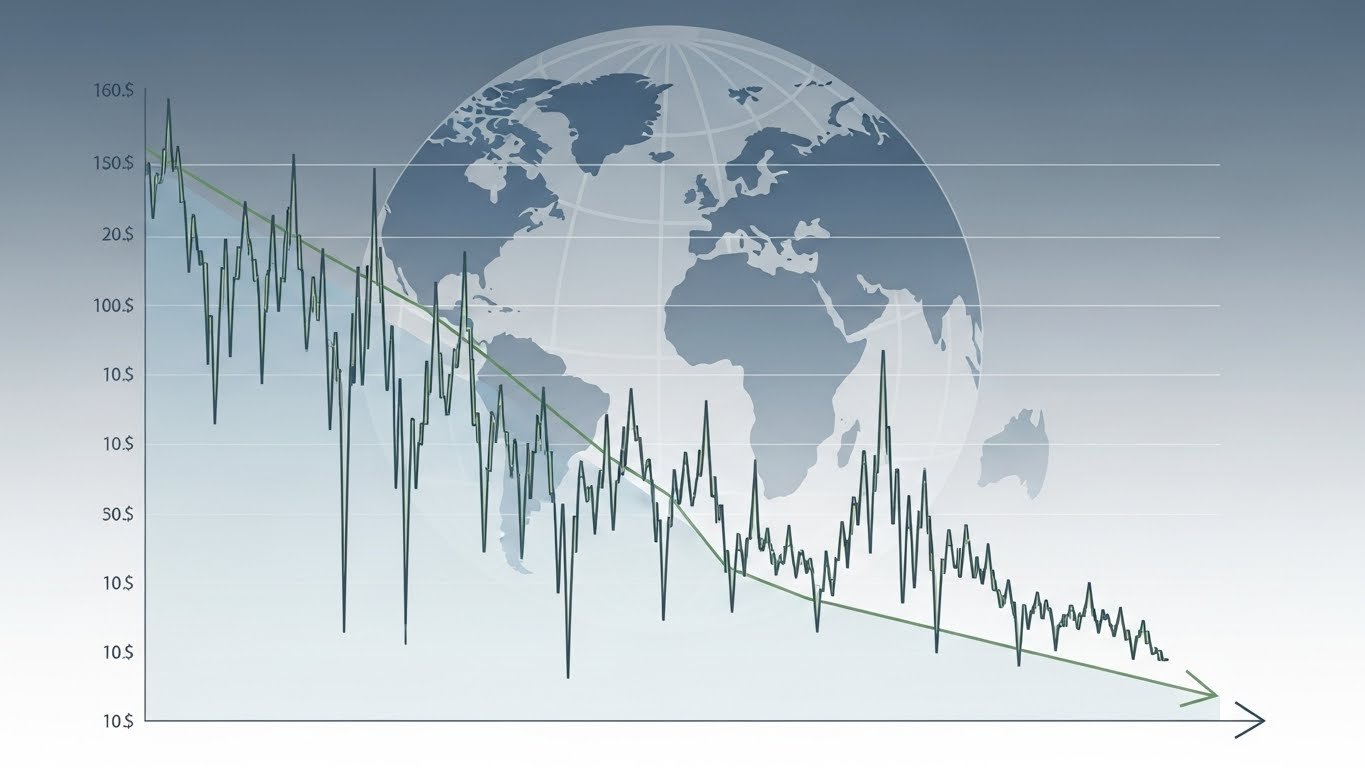
The U.S. dollar is showing renewed weakness this week, sliding for a third straight week as markets price in expectations of Federal Reserve interest rate cuts and continued uncertainty tied to trade policy. Despite occasional rebounds in currency markets, investors are increasingly focused on how monetary policy — including potential rate cuts and central bank communications — will influence the dollar’s value heading into 2026. The ongoing debate over U.S. monetary strategy is now intersecting with global trade tensions, shifting capital flows, and currency diversification efforts by major borrowers. This combination of economic forces is raising questions about the dollar’s stability and what it means for global investors, emerging markets, and U.S. export competitiveness. Source: Reuters — summarized and analyzed by TheDollarPulse.
Key Development
The U.S. dollar has fallen for the third consecutive week as investors weigh prospects for Federal Reserve policy easing and rate cuts in the year ahead, weakening the currency relative to global peers. Markets are pricing in further reductions in benchmark rates as early as next year, signaling a shift away from the higher rate environment that supported the dollar earlier in 2025. Source: Reuters — summarized and analyzed by TheDollarPulse. Reuters
Why It Matters
A sustained weakness in the dollar matters because it affects everything from import prices and inflation to cross-border capital flows and the dollar’s role as the world’s reserve currency. Investors often view the dollar as a safe haven, but when confidence wanes — particularly as expectations rise for more accommodative monetary policy — that perception erodes. Weakness in the dollar can boost U.S. exports by making American goods cheaper abroad, but it also raises the cost of imports for consumers and businesses. Source: Market pricing for Fed rate expectations — summarized and analyzed by TheDollarPulse. ebury.com
Market Implications
Currency markets have been volatile as traders balance expectations of Federal Reserve moves with broader macroeconomic signals. The prospect of further rate cuts has dampened the dollar’s appeal, even as occasional rebounds occur when data suggests resilience in parts of the U.S. economy. A weaker greenback tends to support commodity prices and emerging market assets, but it also puts pressure on economies that rely on dollar-denominated debt or import inputs. Emerging markets such as India have seen local currencies struggle as global investors recalibrate risk exposure in light of dollar movements. Source: Reuters reporting on currency dynamics and investor positioning — summarized and analyzed by TheDollarPulse. Reuters
Trade and Policy Drivers
Trade tensions and tariff policies remain key drivers behind currency fluctuations. Reports indicate that Asian nations and major borrowers are increasingly turning to European capital markets to reduce reliance on U.S. dollar financing, signaling a shift in global financial relationships. This diversification reflects concerns about tariff impacts, monetary policy uncertainty, and the relative attractiveness of other financial centers. Source: Times of India reporting on diversification away from the dollar — summarized and analyzed by TheDollarPulse. The Times of India
What Comes Next
Looking ahead, the trajectory of the U.S. dollar will hinge on Federal Reserve policy decisions, inflation trends, and global trade dynamics. With markets expecting further easing from the Fed and continued trade frictions, the greenback may experience heightened volatility. Investors will closely monitor upcoming monetary policy meetings, inflation data, and geopolitical developments to gauge the dollar’s path. The interplay of these factors will influence everything from interest rate differentials to global asset allocation strategies. Source: Markets pricing and central bank outlook — summarized and analyzed by TheDollarPulse. ebury.com
TheDollarPulse Analysis
The key takeaway is that the U.S. dollar’s recent weakness reflects sentiment and expectation more than immediate fundamental deterioration. Monetary policy expectations — especially around rate cuts — are currently the dominant driver of dollar performance. While this trend could persist into 2026, occasional rebounds are likely as markets digest incoming economic data and central bank communications. For investors, currency volatility presents both risks and opportunities: hedging strategies and diversification remain crucial in managing exposure to dollar fluctuations. Meanwhile, U.S. policymakers face the challenge of balancing growth support with currency stability in an increasingly interconnected global economy.
Sources
Source: Reuters — summarized and analyzed by TheDollarPulse.
Source: Times of India reporting on dollar diversification — summarized and analyzed by TheDollarPulse.
This article contains original analysis and does not reproduce copyrighted text.