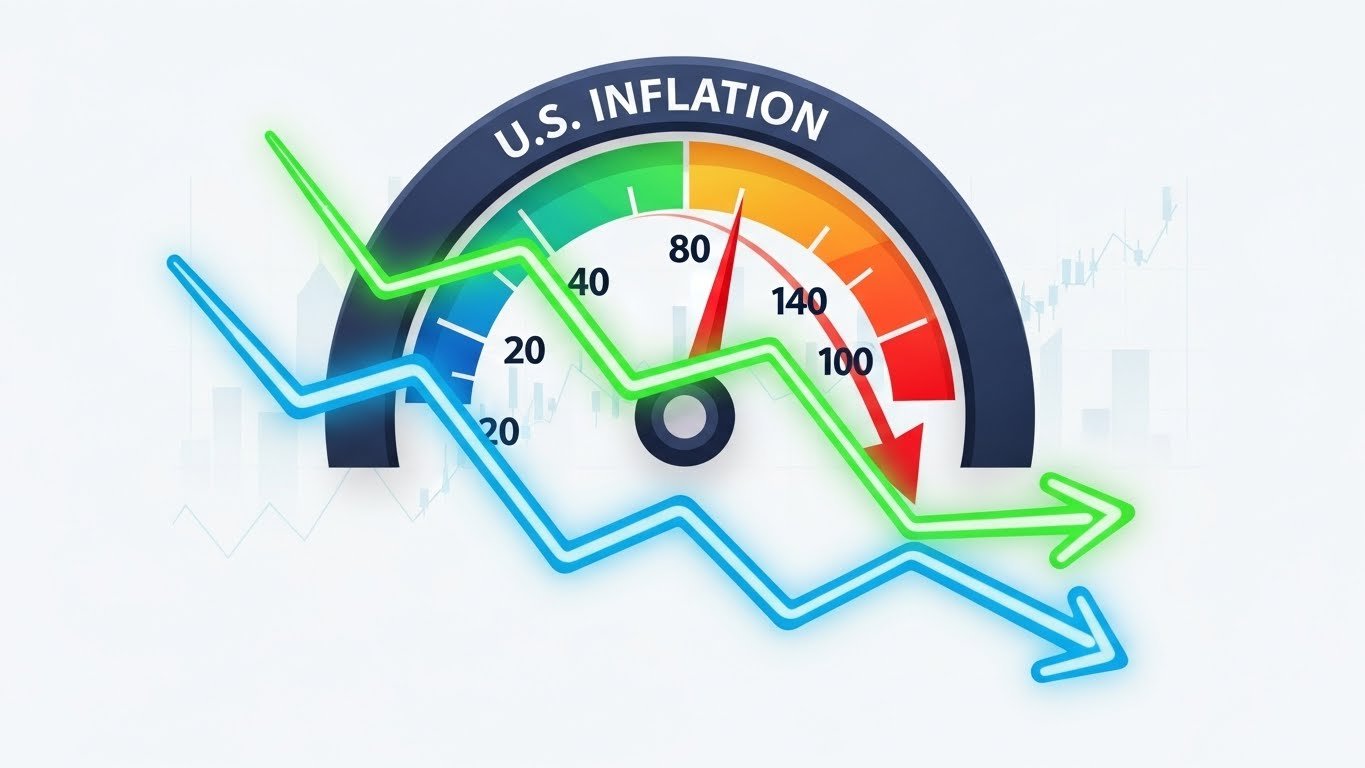
U.S. inflation cooled more than expected in the latest monthly data, signaling a potential turning point for consumers and policymakers as the economy heads into 2026. The new report shows price growth easing across several major categories, including goods, energy, and key services — areas that previously kept inflation stubbornly high. While the moderation offers relief to households strained by years of elevated prices, economists warn that the slowdown may not be uniform, with some sectors still facing persistent cost pressures. Markets reacted with cautious optimism as investors recalibrated expectations for Federal Reserve policy and the broader economic outlook. Source: Economic reporting and inflation analysis — summarized and analyzed by TheDollarPulse.
Key Development
The latest Consumer Price Index (CPI) report revealed an unexpected deceleration in monthly inflation, driven by declines in durable goods pricing and softer trends in housing and transportation costs. Economists noted that cooling consumer demand and improved supply-chain conditions contributed to the easing. Meanwhile, wage growth, though steady, no longer appears to be accelerating inflation in service sectors at the same pace as earlier in the year. Source: Federal economic data releases and economist commentary — summarized and analyzed by TheDollarPulse.
Why It Matters
A sustained slowdown in inflation has major implications for households, businesses, and policymakers. Lower inflation:
• Improves consumer purchasing power
• Reduces pressure on the Federal Reserve to raise rates
• Helps stabilize borrowing costs across mortgages, auto loans, and credit cards
• Eases strain on low- and middle-income households disproportionately impacted by price spikes
For the Fed, the data complicates the debate over the timing of future rate cuts. While slowing inflation supports a more accommodative stance, policymakers remain cautious about declaring victory too early. Source: Macro policy insights — summarized and analyzed by TheDollarPulse.
Market and Business Implications
Financial markets saw moderate gains as investors interpreted the inflation slowdown as a signal that the Fed may gain flexibility in 2026. Bond yields dipped, reflecting expectations of a more favorable interest-rate environment. Businesses in retail, travel, and housing sectors welcomed the cooling trend, anticipating improved consumer activity and reduced cost pressures. However, analysts warn that sectors tied to global commodities — including fuel and food — remain vulnerable to supply shocks and geopolitical tensions. Source: Market reactions and industry analysis — summarized and analyzed by TheDollarPulse.
What Comes Next
Economists will monitor upcoming data releases to determine whether the slowdown marks a steady trend or a temporary pullback. Key indicators include wage growth, shelter inflation, and global commodity prices. If inflation continues to moderate, the Federal Reserve could introduce rate cuts earlier than previously projected, potentially stimulating growth and easing financial conditions. Conversely, any resurgence in energy prices or supply disruptions could reignite upward pressure. Policymakers are urging caution as they assess the next phase of monetary strategy. Source: Economic forecasts and central bank outlook — summarized and analyzed by TheDollarPulse.
TheDollarPulse Analysis
The key takeaway is that the latest inflation data reflects meaningful progress — but not resolution. The slowdown strengthens the case for a more balanced monetary approach in 2026, offering households some relief and giving markets breathing room. Still, uncertainty remains high, and the trajectory of inflation will be shaped by shifting consumer behavior, wage trends, energy markets, and geopolitical risks. For investors and consumers alike, cautious optimism — paired with close monitoring — is the most realistic stance moving forward.
Sources
Source: Federal economic data, economist interviews, and market research reports — summarized and analyzed by TheDollarPulse.
This article contains original analysis and does not reproduce copyrighted text