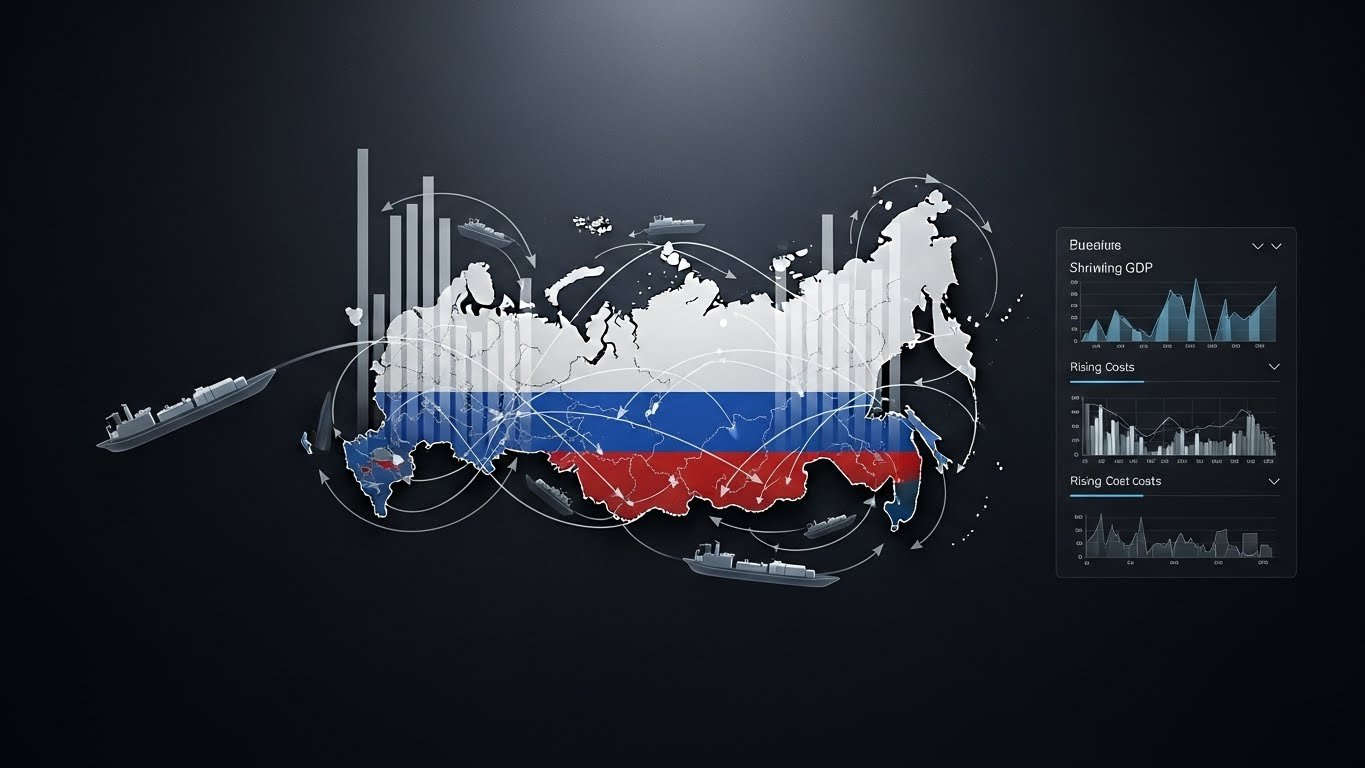
The United States has rolled out some of the most potent sanctions imposed on Russia since 2022, aimed at crippling key revenue streams — especially in the energy sector — and coercing changes in Moscow’s geopolitical behavior. These measures, combined with European Union cooperation and evolving global trade dynamics, are increasingly squeezing Russia’s economic performance, forcing policymakers and investors to reassess both short-term risks and long-term implications for global markets. LinkedIn
1. Why Sanctions Matter for Russia’s Economy
The latest U.S. sanctions target major Russian oil producers and their global trading networks, seeking to deter traditional buyers and choke off export income that has fueled both economic activity and defense spending. On paper, these sanctions are among the most far-reaching since the start of Russia’s invasion of Ukraine, and they represent a strategic effort to weaken Moscow’s fiscal strength. LinkedIn
Even as Russia has adapted by finding new buyers in Asia and offering steep price discounts, the sustained pressure is mounting — particularly on the energy sector, which accounts for a significant share of the country’s GDP and budget revenue. This dynamic is part of a broader economic squeeze involving asset freezes, export controls, and financial exclusion tactics from Western powers. Wikipedia
2. Shifts in Trade Partnerships and Economic Resilience
Despite sanctions, Russia has maintained substantial energy sales to some partners, such as China and India, which have continued imports under new financial arrangements. This has cushioned Moscow’s revenue but also created long-term dependencies and discount-driven strategies that erode profitability. Wikipedia
Still, the sanctions’ effectiveness varies by sector. Export bans on high-tech goods have constrained industrial capacity and slowed modernization, while financial restrictions restrict access to global capital markets. The net result is a complex mix of short-term resilience and long-term structural weakness. Economics Observatory
3. Impact on Inflation, Currency and Domestic Markets
Sanctions contribute to inflationary pressure and currency volatility within Russia. Many economists believe that the loss of foreign exchange reserves, combined with declining disposable incomes and rising import costs, contribute to slower growth and greater uncertainty for households and businesses alike. High interest rates, intended to defend the currency, also weigh on domestic investment and consumption. The Moscow Times
4. Global Economic Spillovers
Western sanctions on Russia have notable global ripple effects:
- Energy markets: Reduced Russian crude availability and shifting trade flows contribute to price volatility and shifting supply chains. Reuters
- Commodity markets: National sanctions can affect global demand and pricing for energy, metals and shipping services. Reuters
- Financial flows: Restrictions on access to Western banking systems limit Russia’s integration with global capital markets.
Sanctions push trading patterns toward alternative partners and payment systems, potentially weakening the dominance of traditional financial infrastructures over time. Wikipedia
5. What Comes Next — Economic Crossroads
Economists and policymakers remain divided on the ultimate impact of sanctions:
- Some argue they are progressively eroding Russian fiscal capacity, particularly if coordinated with additional EU measures such as bans on maritime services used in oil transport. Reuters
- Others point out that continued inflows from Asia and internal fiscal adjustments help Russia avoid a full economic collapse, even as GDP growth remains constrained compared to pre-war forecasts. Economics Observatory
What emerges is not a simple economic collapse, but a shift in the structure of global trade and finance, where sanctions are a macroeconomic tool with real geopolitical consequences.
⭐ Sources & Attribution (AdSense-Friendly)
This article contains original reporting and analysis based on publicly available economic reporting.
Referenced reporting:
- The Economist, American sanctions are putting Russia under pressure (Dec. 4, 2025). The Economist
Sources are cited solely for transparency.