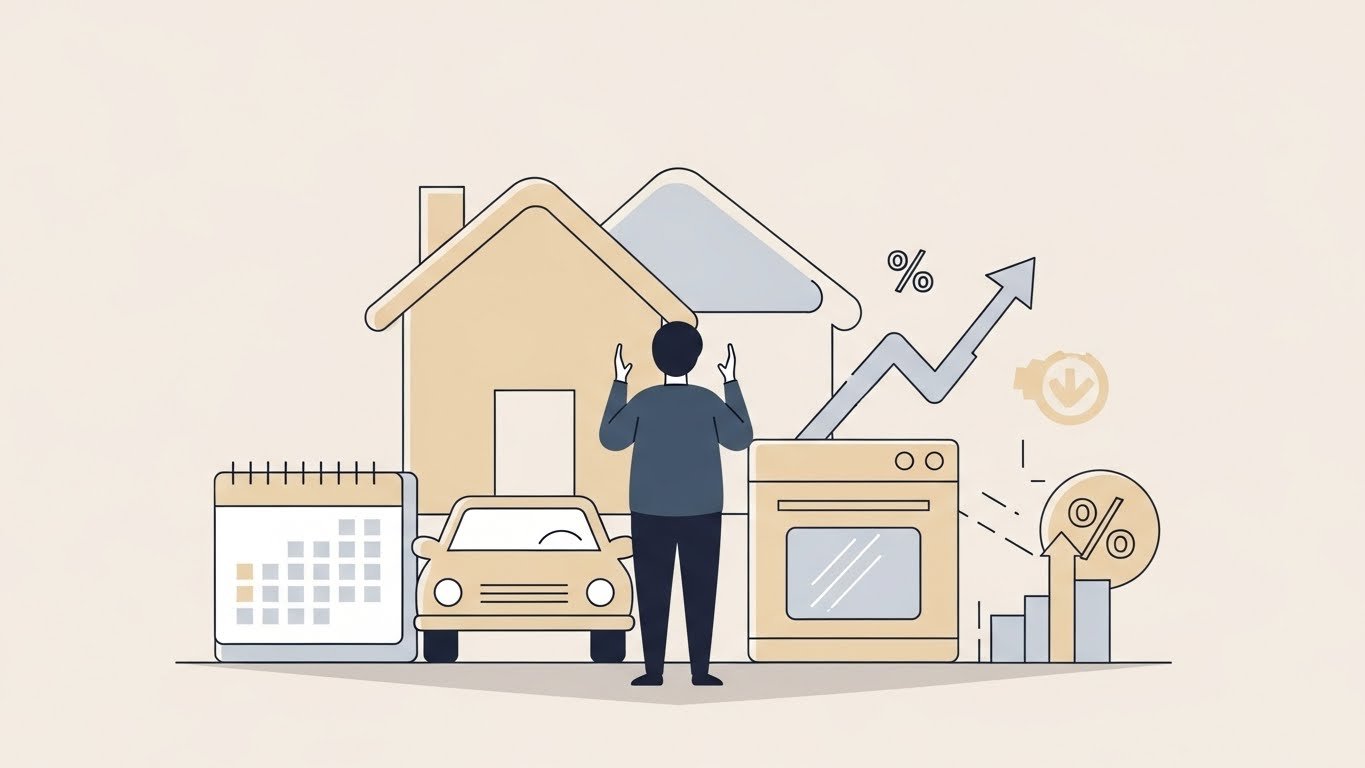
Large purchases are being postponed across the U.S. in 2026. From cars and home renovations to major appliances and travel upgrades, consumers are waiting longer before committing. The shift isn’t driven by panic — it’s driven by calculation.
Higher borrowing costs and economic uncertainty are reshaping how households assess risk.
What’s Driving the Delay in Big Purchases
Several factors are influencing decisions:
- High interest rates on financing
- Increased cost of essentials
- Reduced confidence in future income growth
- Greater awareness of long-term debt costs
Consumers are prioritizing flexibility over immediacy.
Which Purchases Are Being Delayed the Most
The slowdown is most visible in:
- Vehicle upgrades
- Home improvement projects
- Major appliances
- Discretionary travel spending
These purchases often require financing, making rate sensitivity high.
Why This Isn’t a Sign of Collapse
Delaying purchases reflects caution, not distress. Many households are choosing to preserve cash and avoid long-term commitments until conditions stabilize.
This behavior contrasts with past downturns driven by forced cutbacks.
How Delayed Spending Affects the Economy
When big-ticket spending slows:
- Certain industries face softer demand
- Employment growth moderates
- Credit usage patterns shift
- Inflation pressures ease in some categories
The economy adjusts rather than contracts abruptly.
What Households Gain by Waiting
By delaying purchases, consumers:
- Avoid high interest costs
- Maintain liquidity
- Reduce debt exposure
- Gain time to reassess priorities
Patience can be financially protective.
What to Watch Going Forward
Key indicators include:
- Interest rate trends
- Consumer confidence data
- Credit approval rates
- Retail financing activity
These signals show whether delays turn into cancellations.
The Key Takeaway
In 2026, delaying big purchases is a strategic response to higher costs and uncertainty. Understanding this shift offers insight into both household behavior and the broader economic landscape.