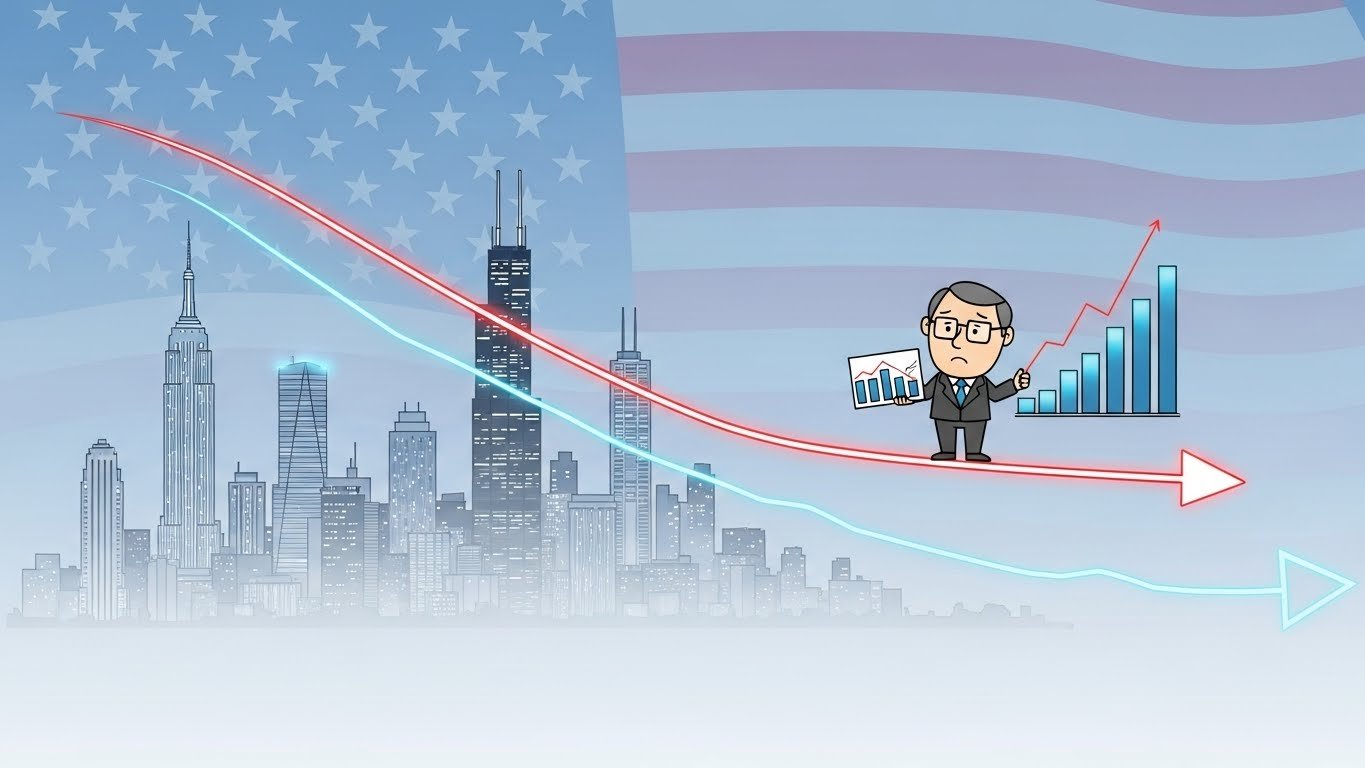
The phrase “quiet recession” has exploded across financial circles — but not because of crashing markets or mass layoffs. Instead, analysts say the U.S. may be entering a slowdown that’s harder to see: softer consumer demand, rising household debt, slower hiring, and shrinking savings cushions. Nothing dramatic happens at once. But everything subtle happens at the same time — and that’s why people are paying attention.
Economists argue the danger isn’t a sharp collapse. It’s a slow erosion that households only notice months later. Credit card delinquencies are creeping up. Auto repossessions are rising. Job switching has slowed. And small businesses are reporting weaker sales, especially in discretionary categories. It’s not a crisis — but it’s not comfortable either.
Why this matters: a quiet recession affects behavior long before it hits the data. Families spend less. Businesses delay investments. Borrowing becomes more expensive. These micro-shifts compound into a larger macro story.
The key takeaway: If the slowdown continues, the Fed may be forced to choose between stabilizing prices and protecting growth — and that choice will define the first half of 2026.