More people have access to investing tools than at any time in history, yet many first-time investors feel overwhelmed, hesitant, and unsure about their decisions. This article explains why investing feels more confusing today, how market structure and information overload play a role, and what this says about the modern financial environment.
Key Takeaways
- Access to investing has expanded faster than understanding.
- Information overload makes decision-making harder, not easier.
- Market volatility feels more personal in a digital, always-on environment.
- Uncertainty is often about structure and expectations, not just market risk.
Why investing feels more stressful than empowering
In theory, investing has never been easier.
Opening an account takes minutes. Buying and selling assets takes seconds. Information is everywhere.
And yet, many people who are just starting to invest feel more anxious than confident.
They worry about timing. They worry about making mistakes. They worry about being the last one to understand what is going on.
Instead of feeling like a long-term process, investing often feels like a series of high-pressure decisions.
This is not because people are less capable than before. It is because the environment around investing has changed in ways that make uncertainty more visible and more constant.
This article is for informational purposes only and does not constitute financial advice.
Access has expanded faster than financial context
One of the biggest changes in investing over the past decade is how easy it has become to participate.
That is a positive development.
But access has expanded much faster than education or context.
Many new investors enter the market with:
- Tools that are extremely powerful
- Interfaces that encourage frequent action
- Streams of information that never stop
What they often lack is a stable framework for interpreting what they see.
Without that framework, every market move feels like a personal test.
Information overload does not create clarity
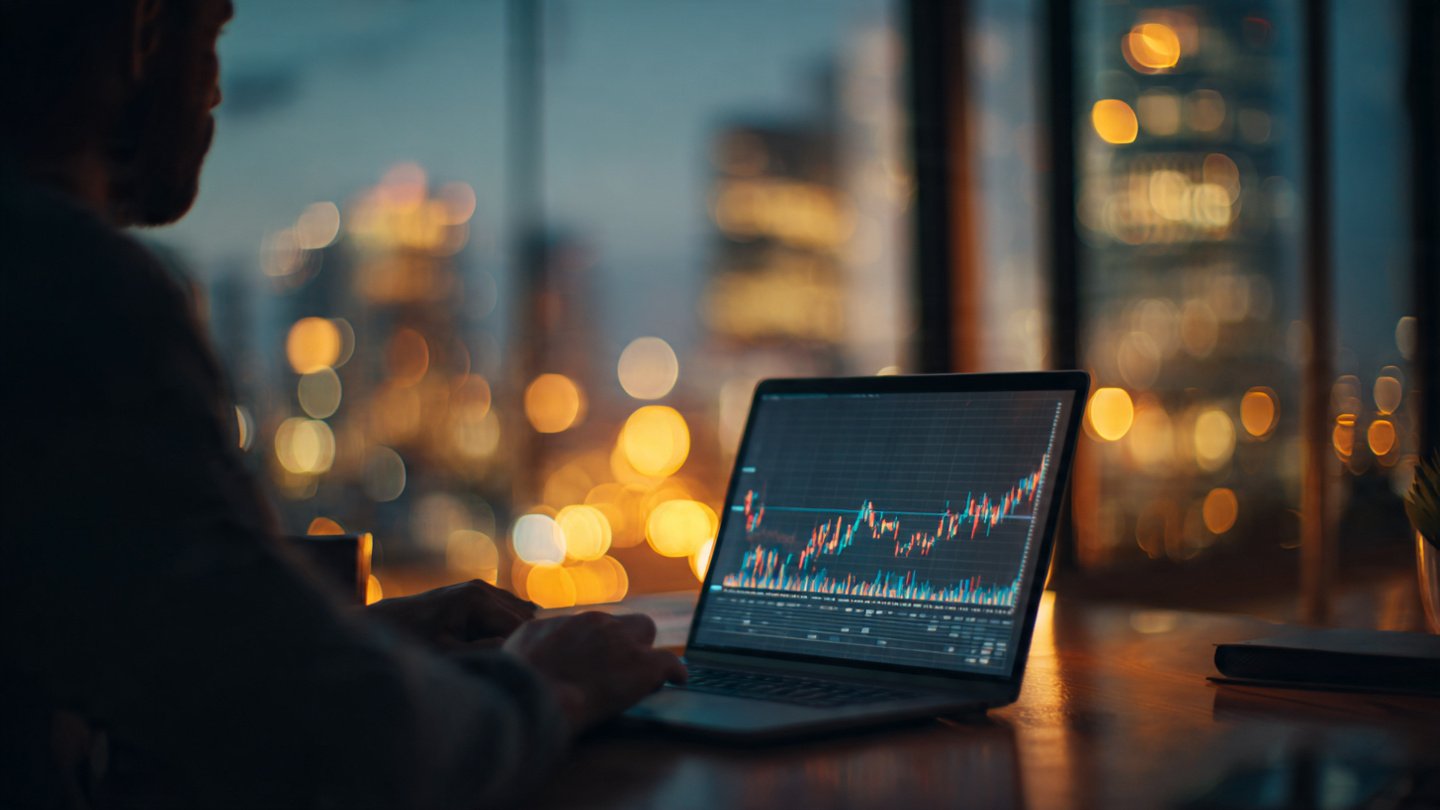
Modern investors are surrounded by:
- News alerts
- Charts
- Opinions
- Social media commentary
- Real-time performance updates
This constant flow of data creates the impression of control.
In reality, it often does the opposite.
When everything is visible all the time, it becomes harder to distinguish:
- What matters from what is noise
- What is structural from what is temporary
- What requires action from what requires patience
The result is a persistent sense of uncertainty, even in relatively normal market conditions.
Volatility feels different in a real-time world
Markets have always moved up and down.
What has changed is how immediately and personally those movements are experienced.
When portfolio values update every second on a phone screen, fluctuations stop being abstract.
They become emotional.
Small changes feel significant. Normal drawdowns feel like mistakes. Waiting feels like doing nothing.
This makes investing feel more like a test of nerves than a long-term process.
The pressure of comparison
Another modern feature is constant comparison.
People can see:
- What others claim to be earning
- What is trending
- What they “could have” bought
- What they “missed”
This creates a sense that there is always a better decision that was just out of reach.
In earlier periods, most investing happened quietly and infrequently. Today, it happens in public and in real time.
That changes the emotional experience, even if the underlying economics are the same.
Why simplicity has become harder, not easier
Paradoxically, more choice has made simplicity more difficult.
There are now:
- Thousands of funds
- Thousands of individual assets
- Endless strategies and combinations
For a beginner, this abundance does not feel empowering. It feels paralyzing.
Every choice seems to imply a hundred other choices that might have been better.
The difference between market risk and decision stress
It is important to separate two things:
- The risk that markets will move
- The stress of constantly making decisions
The first is unavoidable.
The second is largely a product of how modern investing environments are designed.
When platforms emphasize activity and immediacy, the psychological load increases even if the economic risk stays the same.
Why this is not a sign that investing is “broken”
It is tempting to conclude that the system itself has become hostile to beginners.
In reality, the underlying principles of investing have not changed very much.
What has changed is:
- The speed
- The visibility
- The noise
- The social context
These factors make the experience feel more intense, even if the fundamentals are familiar.
What the data does not yet show
What the data does not yet show is a widespread improvement in how new investors experience uncertainty and stress.
So far, evidence suggests that access will continue to expand faster than understanding, and that the emotional side of investing will remain a challenge.
Why feeling uncertain is not a personal failure
Feeling unsure in today’s investing environment is not a sign of weakness or incompetence.
It is a rational response to a system that delivers:
- Too much information
- Too many choices
- Too much immediacy
Uncertainty is not a flaw in the individual. It is a feature of the environment.
Investing is still a long-term process, even if it doesn’t feel like one
Despite how it feels day to day, investing has not turned into a short-term contest.
It remains a long-term activity built around patience, time, and compounding.
The modern environment makes that harder to perceive and harder to emotionally tolerate.
For many first-time investors, the challenge is not learning what to buy, but learning how to exist in a system that never stops asking for attention.