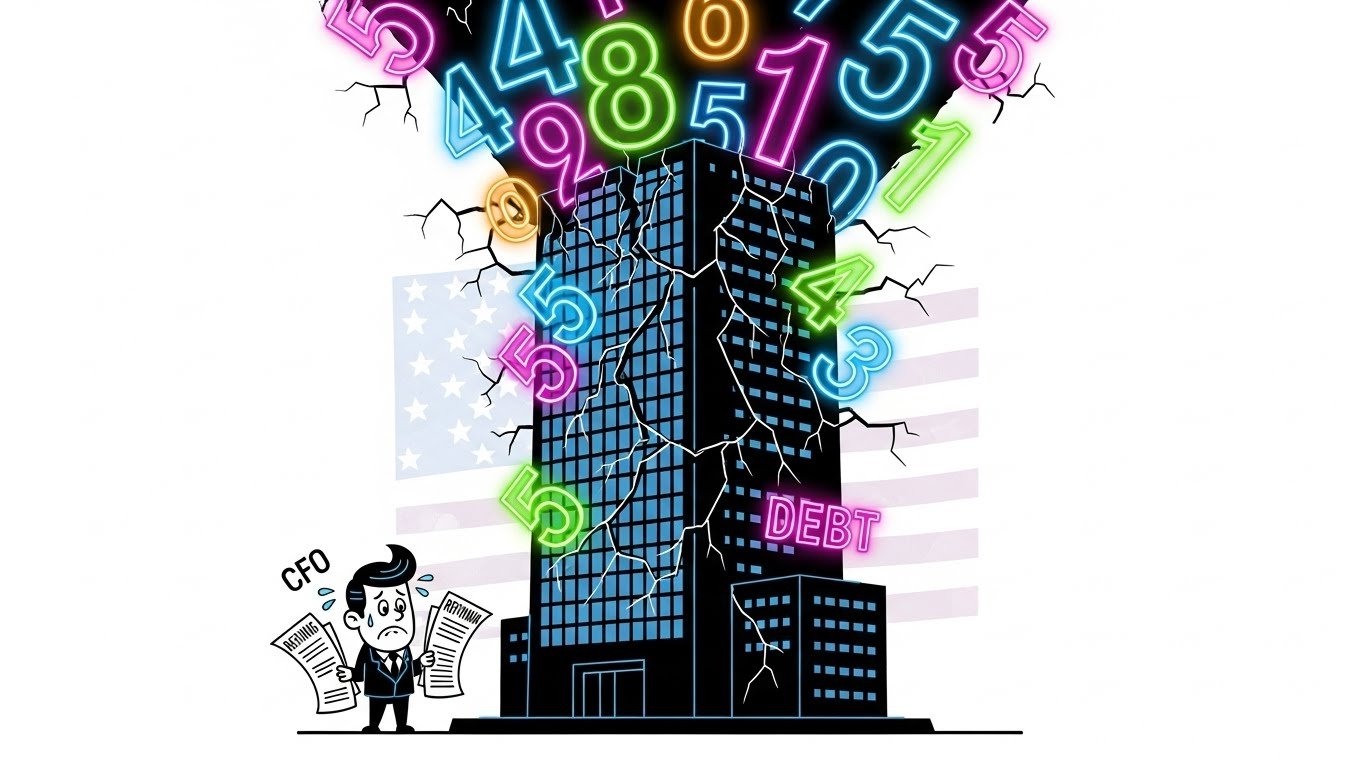
A new warning is spreading across Wall Street: analysts say a “corporate debt crunch” could hit in 2026 as billions in low-interest loans approach maturity. Companies that borrowed heavily during the near-zero-rate era are now preparing to refinance at much higher costs — a shift that could reshape profits, hiring, and investment across multiple sectors.
According to credit strategists, more than one-third of outstanding corporate debt in the U.S. is set to roll over within the next 18 months. With current interest rates significantly above pandemic-era levels, many firms may face a surge in borrowing costs that could cut deep into margins. Some highly leveraged industries — including commercial real estate, retail, and manufacturing — appear especially vulnerable.
Investors are paying close attention to early signs: rising default risk indexes, widening credit spreads, and a spike in companies issuing cautionary guidance. Several CFOs have already told analysts that refinancing costs will be “materially higher than previously anticipated.”
What does this mean for the broader economy? Potentially slower hiring, fewer capital projects, and increased pressure on stock valuations. If refinancing stress spreads, it could even tighten credit availability for small businesses.
Economists emphasize that this is not a crisis — yet. But in a high-rate environment, corporate debt rollover risk is becoming one of the most closely watched indicators for 2026.