
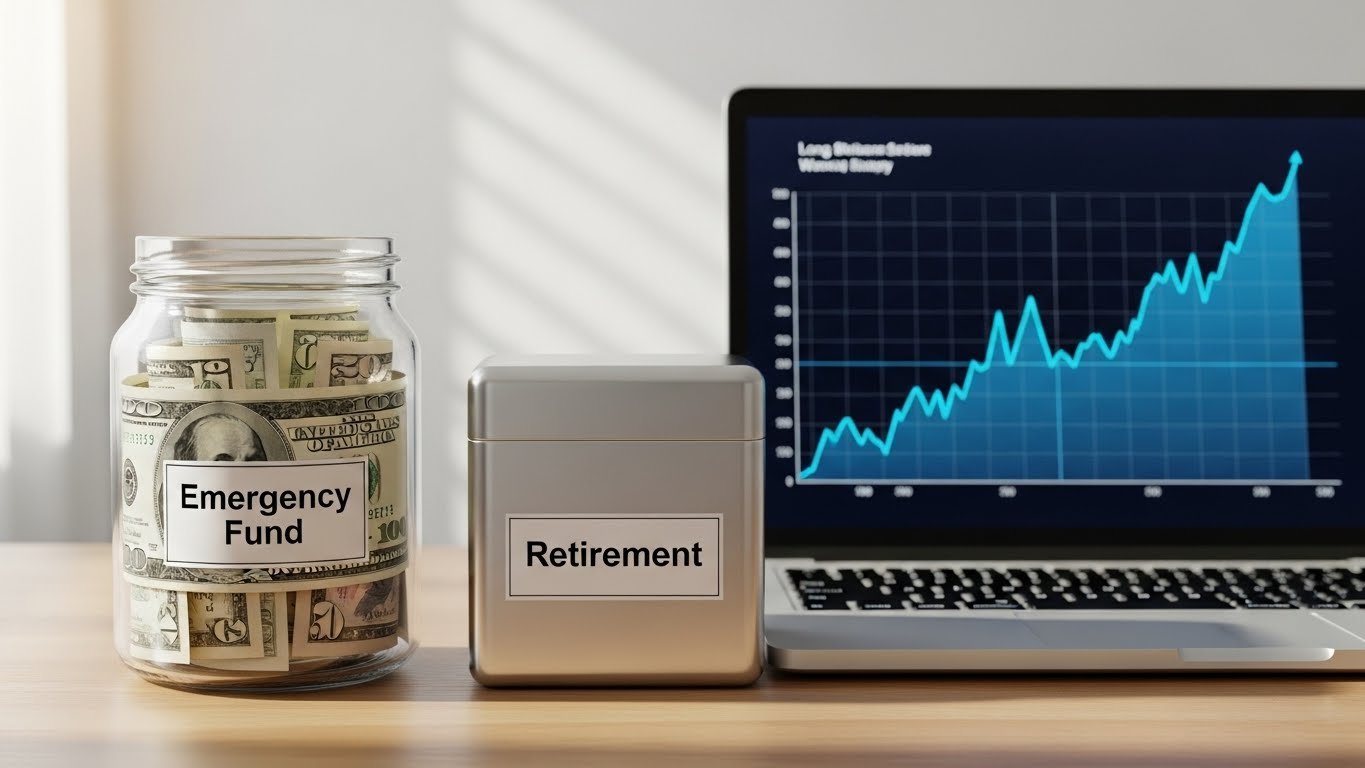
One of the biggest financial mistakes people make is treating their retirement savings like a backup emergency fund. It feels harmless — after all, it’s “your money.” But in 2026, with rising costs, unpredictable markets, and tighter household budgets, mixing these two accounts is one of the fastest ways to sabotage long-term wealth.
Your emergency fund protects your present.
Your retirement fund protects your future.
They cannot serve the same purpose.
1. Retirement Accounts Aren’t Designed for Short-Term Access
401(k)s, IRAs, Roth IRAs, and investment portfolios carry:
- withdrawal penalties
- tax consequences
- forced selling during downturns
- long-term growth expectations
Pulling money early triggers losses far beyond the withdrawal itself.
You pay penalties, lose compounding, and interrupt decades of growth.
2. Markets Are Too Volatile in 2026 to Use Retirement Money in Emergencies
If you withdraw during a market dip — and most emergencies happen during stressful times — you lock in losses permanently.
An emergency fund prevents this.
It gives you cash when you need it, without touching long-term investments.
3. Mixing Accounts Creates a False Sense of Security
Many people believe, “I have $40,000 saved; I’m safe.”
But if $35,000 of that is retirement money, you’re not safe — you’re exposed.
The real question is:
How much of that money can you access today without consequences?
That is your true financial stability.
4. Each Account Has a Different Job
Your emergency fund covers:
- job loss
- medical bills
- car repairs
- urgent travel
- unexpected expenses
Your retirement fund covers:
- decades of living expenses
- healthcare in old age
- inflation
- longevity
- financial independence
Confusing the two leads to under-saving and over-spending.
5. A Strong System for 2026
The smartest structure is simple:
- 3–6 months of expenses in a high-yield savings account
- Automated contributions into retirement accounts
- Never mix the two — ever
- Review progress quarterly
- Increase contributions annually
This separation protects both your present and your future.
Bottom Line
If you want a secure retirement, you must protect your long-term money from short-term problems. Build your emergency fund first. Guard your retirement accounts fiercely.
Your future wealth depends on the discipline you build today.